
Commercial
Cheque Bounce Evidence Checklist: Proving a Section 138 Case
A document-first guide for proving liability, dishonour, statutory notice and responses to common defence narratives.
This Section 138 guide explains proving each disputed fact through organised and authentic records. It is educational material for Indian cheque-bounce matters, not a substitute for reviewing the actual instrument, transaction and dates with a qualified advocate.
The strongest starting point is a complete record. Preserve the cheque and bank documents, distinguish what is known from what is assumed, and make decisions from the statutory chronology rather than pressure or recollection.
Create an evidence map
What to verify
Create an evidence map. Within proving each disputed fact through organised and authentic records, this issue should be approached as more than a formality. Compare original instrument, bank records, contracts, invoices, delivery papers, ledgers, transfer statements, message exports, notices and receipts with the actual transaction and identify the precise fact each record supports. A cheque can be important evidence, but it should be connected to the claimed liability, the drawer, the banking event and the later statutory steps. The first question is factual: what happened, on which date, and which record proves it? Preserve original material and record every credit accurately. Common risks at this point are cropped screenshots, altered originals, selective chats, unsupported ledgers or an amount that does not reconcile. The sensible operational response is to scan without altering, retain complete records, name files by source and plan evidence with counsel. Seek case-specific advice on contested service, limitation, jurisdiction and evidence.
Protect the original cheque
Why it matters
Protect the original cheque. Within proving each disputed fact through organised and authentic records, this issue should be approached as more than a formality. Compare original instrument, bank records, contracts, invoices, delivery papers, ledgers, transfer statements, message exports, notices and receipts with the actual transaction and identify the precise fact each record supports. A cheque can be important evidence, but it should be connected to the claimed liability, the drawer, the banking event and the later statutory steps. This is a frequent point of dispute because business shorthand rarely captures the complete legal position. Preserve original material and record every credit accurately. Common risks at this point are cropped screenshots, altered originals, selective chats, unsupported ledgers or an amount that does not reconcile. The sensible operational response is to scan without altering, retain complete records, name files by source and plan evidence with counsel. Seek case-specific advice on contested service, limitation, jurisdiction and evidence.
Read the return memo
How to prepare
Read the return memo. Within proving each disputed fact through organised and authentic records, this issue should be approached as more than a formality. Compare original instrument, bank records, contracts, invoices, delivery papers, ledgers, transfer statements, message exports, notices and receipts with the actual transaction and identify the precise fact each record supports. A cheque can be important evidence, but it should be connected to the claimed liability, the drawer, the banking event and the later statutory steps. Accuracy at this stage is valuable because it prevents a later pleading from relying on memory or inference. Preserve original material and record every credit accurately. Common risks at this point are cropped screenshots, altered originals, selective chats, unsupported ledgers or an amount that does not reconcile. The sensible operational response is to scan without altering, retain complete records, name files by source and plan evidence with counsel. Seek case-specific advice on contested service, limitation, jurisdiction and evidence.
| Review item | Why it matters |
|---|---|
| Source document | Supports the actual event and date |
| Party communication | Shows contemporary understanding |
| Payment or service record | Clarifies what remains disputed |
Prove the liability
What to verify
Prove the liability. Within proving each disputed fact through organised and authentic records, this issue should be approached as more than a formality. Compare original instrument, bank records, contracts, invoices, delivery papers, ledgers, transfer statements, message exports, notices and receipts with the actual transaction and identify the precise fact each record supports. A cheque can be important evidence, but it should be connected to the claimed liability, the drawer, the banking event and the later statutory steps. A careful file helps both sides understand whether the dispute is about payment, proof, timing, service or the identity of a party. Preserve original material and record every credit accurately. Common risks at this point are cropped screenshots, altered originals, selective chats, unsupported ledgers or an amount that does not reconcile. The sensible operational response is to scan without altering, retain complete records, name files by source and plan evidence with counsel. Seek case-specific advice on contested service, limitation, jurisdiction and evidence.
Reconcile ledgers
Why it matters
Reconcile ledgers. Within proving each disputed fact through organised and authentic records, this issue should be approached as more than a formality. Compare original instrument, bank records, contracts, invoices, delivery papers, ledgers, transfer statements, message exports, notices and receipts with the actual transaction and identify the precise fact each record supports. A cheque can be important evidence, but it should be connected to the claimed liability, the drawer, the banking event and the later statutory steps. The first question is factual: what happened, on which date, and which record proves it? Preserve original material and record every credit accurately. Common risks at this point are cropped screenshots, altered originals, selective chats, unsupported ledgers or an amount that does not reconcile. The sensible operational response is to scan without altering, retain complete records, name files by source and plan evidence with counsel. Seek case-specific advice on contested service, limitation, jurisdiction and evidence.
Focused review
- Compare facts with source records
- Keep originals safe and copies readable
- Record payments and replies accurately
- Escalate contested issues for legal advice
Preserve performance proof
How to prepare
Preserve performance proof. Within proving each disputed fact through organised and authentic records, this issue should be approached as more than a formality. Compare original instrument, bank records, contracts, invoices, delivery papers, ledgers, transfer statements, message exports, notices and receipts with the actual transaction and identify the precise fact each record supports. A cheque can be important evidence, but it should be connected to the claimed liability, the drawer, the banking event and the later statutory steps. This is a frequent point of dispute because business shorthand rarely captures the complete legal position. Preserve original material and record every credit accurately. Common risks at this point are cropped screenshots, altered originals, selective chats, unsupported ledgers or an amount that does not reconcile. The sensible operational response is to scan without altering, retain complete records, name files by source and plan evidence with counsel. Seek case-specific advice on contested service, limitation, jurisdiction and evidence.
Capture complete messages
What to verify
Capture complete messages. Within proving each disputed fact through organised and authentic records, this issue should be approached as more than a formality. Compare original instrument, bank records, contracts, invoices, delivery papers, ledgers, transfer statements, message exports, notices and receipts with the actual transaction and identify the precise fact each record supports. A cheque can be important evidence, but it should be connected to the claimed liability, the drawer, the banking event and the later statutory steps. Accuracy at this stage is valuable because it prevents a later pleading from relying on memory or inference. Preserve original material and record every credit accurately. Common risks at this point are cropped screenshots, altered originals, selective chats, unsupported ledgers or an amount that does not reconcile. The sensible operational response is to scan without altering, retain complete records, name files by source and plan evidence with counsel. Seek case-specific advice on contested service, limitation, jurisdiction and evidence.
| Review item | Why it matters |
|---|---|
| Source document | Supports the actual event and date |
| Party communication | Shows contemporary understanding |
| Payment or service record | Clarifies what remains disputed |
Handle electronic evidence
Why it matters
Handle electronic evidence. Within proving each disputed fact through organised and authentic records, this issue should be approached as more than a formality. Compare original instrument, bank records, contracts, invoices, delivery papers, ledgers, transfer statements, message exports, notices and receipts with the actual transaction and identify the precise fact each record supports. A cheque can be important evidence, but it should be connected to the claimed liability, the drawer, the banking event and the later statutory steps. A careful file helps both sides understand whether the dispute is about payment, proof, timing, service or the identity of a party. Preserve original material and record every credit accurately. Common risks at this point are cropped screenshots, altered originals, selective chats, unsupported ledgers or an amount that does not reconcile. The sensible operational response is to scan without altering, retain complete records, name files by source and plan evidence with counsel. Seek case-specific advice on contested service, limitation, jurisdiction and evidence.
Show authority
How to prepare
Show authority. Within proving each disputed fact through organised and authentic records, this issue should be approached as more than a formality. Compare original instrument, bank records, contracts, invoices, delivery papers, ledgers, transfer statements, message exports, notices and receipts with the actual transaction and identify the precise fact each record supports. A cheque can be important evidence, but it should be connected to the claimed liability, the drawer, the banking event and the later statutory steps. The first question is factual: what happened, on which date, and which record proves it? Preserve original material and record every credit accurately. Common risks at this point are cropped screenshots, altered originals, selective chats, unsupported ledgers or an amount that does not reconcile. The sensible operational response is to scan without altering, retain complete records, name files by source and plan evidence with counsel. Seek case-specific advice on contested service, limitation, jurisdiction and evidence.
Focused review
- Compare facts with source records
- Keep originals safe and copies readable
- Record payments and replies accurately
- Escalate contested issues for legal advice
Anticipate security-cheque claims
What to verify
Anticipate security-cheque claims. Within proving each disputed fact through organised and authentic records, this issue should be approached as more than a formality. Compare original instrument, bank records, contracts, invoices, delivery papers, ledgers, transfer statements, message exports, notices and receipts with the actual transaction and identify the precise fact each record supports. A cheque can be important evidence, but it should be connected to the claimed liability, the drawer, the banking event and the later statutory steps. This is a frequent point of dispute because business shorthand rarely captures the complete legal position. Preserve original material and record every credit accurately. Common risks at this point are cropped screenshots, altered originals, selective chats, unsupported ledgers or an amount that does not reconcile. The sensible operational response is to scan without altering, retain complete records, name files by source and plan evidence with counsel. Seek case-specific advice on contested service, limitation, jurisdiction and evidence.

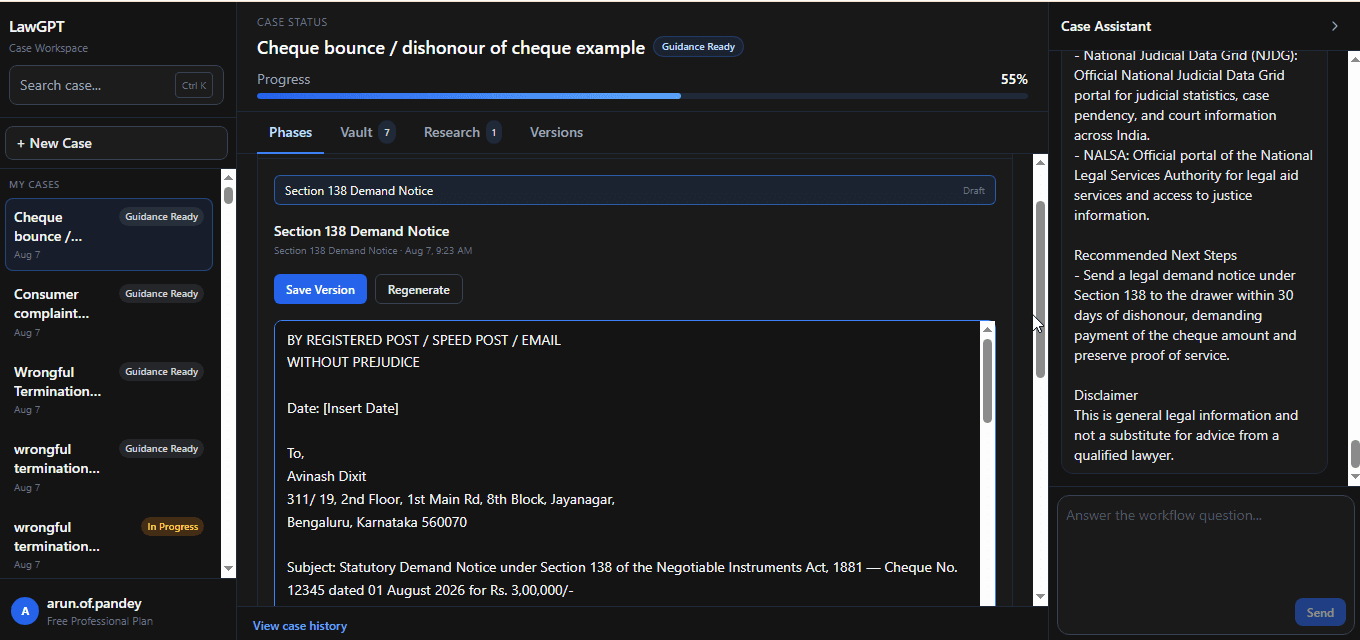
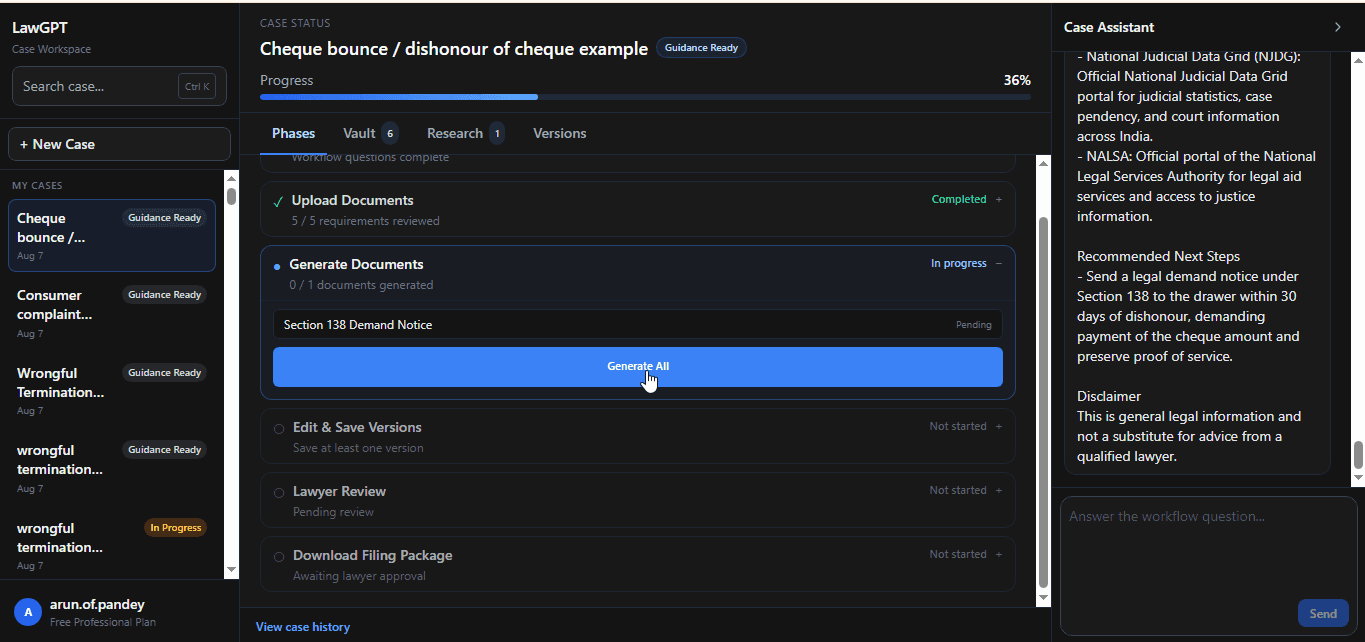
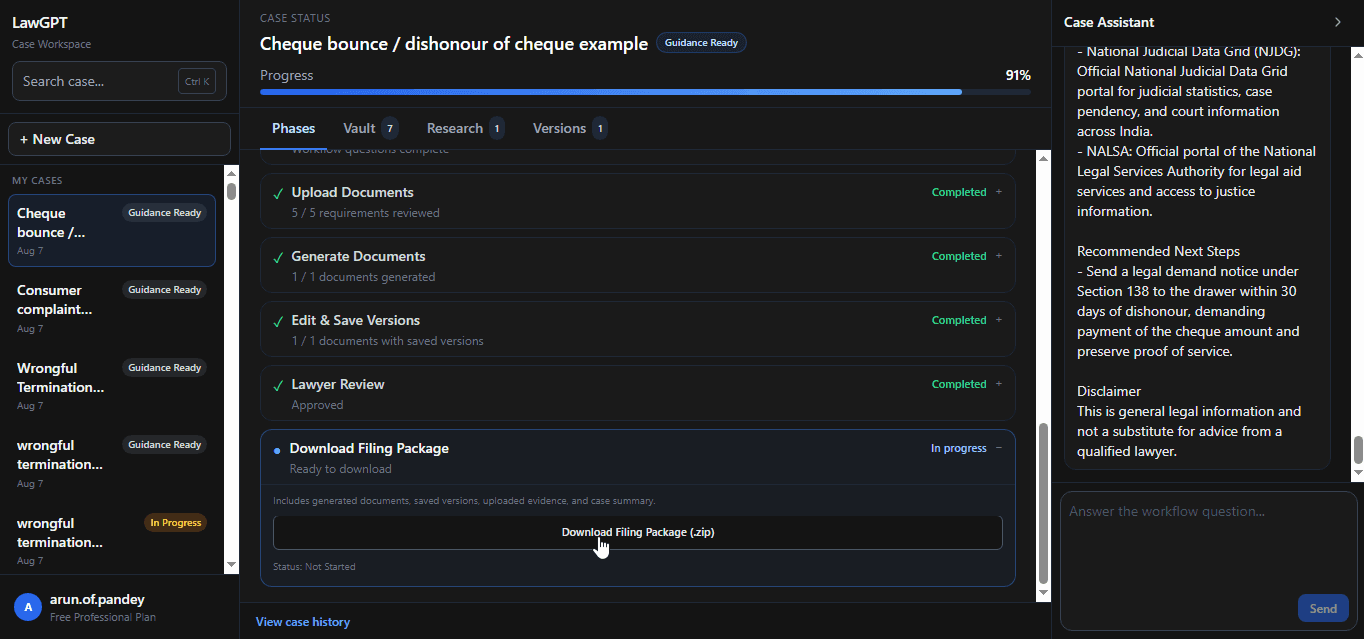
The LawGPT Cheque Bounce workflow can help organise facts, uploads and editable drafts. It does not replace advocate review of limitation, jurisdiction, evidence, pleadings or settlement terms.
Inside the LawGPT workflow
Frequently asked questions
No. Enforceable liability and the required statutory sequence, including notice and non-payment after the applicable opportunity, must be established.