
Traffic & criminal
Drunk Driving Complete Guide for India
A comprehensive road-safety guide to records, enforcement, court, licences, and prevention.
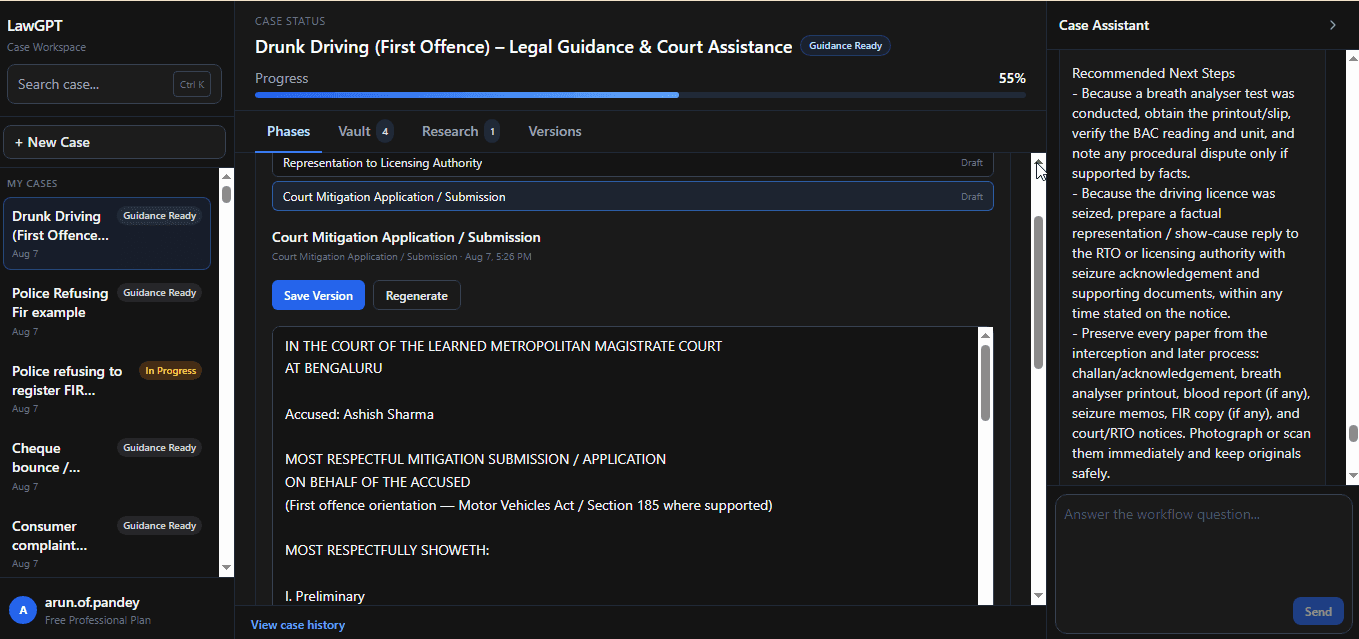
Drunk Driving 30-second demo · 30 sec · plays inside LawGPT
Start with safety, not strategy
Driving after drinking puts passengers, pedestrians, cyclists, and other motorists at risk. Alcohol can reduce judgment before a person feels seriously affected, so confidence is not a fitness test. The responsible decision is made before a gathering: choose a sober driver, book licensed transport, use public transport, or arrange a safe overnight stay. If an allegation has already arisen, do not drive again and do not turn anxiety about the paperwork into a second unsafe journey.
Read official papers as separate records
For the complete response to an allegation, a roadside interaction may generate a challan, test or medical paper, licence receipt, vehicle receipt, station record, court notice, or digital message. Each document may answer a different question. Check the issuing authority, date, vehicle number, reference number, provision cited, and stated next step. Preserve originals exactly as received. A payment screen or an oral assurance should never be assumed to settle every court or licensing issue.
| Record | What to preserve | Why it matters |
|---|---|---|
| Challan or notice | Original and legible copy | Identifies the allegation and reference |
| Test or medical paper | Exact issued record | May describe material relied upon |
| Licence receipt | Receipt and authority details | Clarifies follow-up instructions |
| Court order | Authenticated copy and receipt | Sets binding tasks |
Know the Section 185 context
Section 185 of the Motor Vehicles Act, 1988 is commonly discussed where a person drives or attempts to drive with alcohol in blood exceeding the prescribed limit, or under the influence of drugs to a degree that impairs proper control. The often-cited alcohol threshold is 30 mg per 100 ml of blood. Statutory wording, amendments, related allegations, and the actual record matter. This educational guide cannot determine what is proved in an individual case.
Build a factual chronology promptly
Write a private, dated account while memory is fresh: where the stop occurred, the approximate time, who was present, papers received, vehicle handling, and later official communications. Use neutral language and mark an estimate as an estimate. Do not edit an original record, invent details, or coordinate another person?s version. A careful chronology helps a lawyer understand the sequence without turning a stressful event into an unreliable reconstructed story.
Use the correct authority for each question
how safety, documents, court obligations, licensing, and long-term prevention connect requires separating roles. Police, a court, and the transport or licensing authority may each issue their own records and directions. A court date may not resolve licence status; possession of a physical card may not establish permission to drive; and an online entry may not show every obligation. Ask the named authority through published channels, retain any response, and obtain specific legal advice where the answer can affect liberty, licence, insurance, or employment.
Keep this practical file
- Challan and authorised payment receipts
- Licence, registration, insurance, and PUC copies
- Test, medical, seizure, or station papers
- Court notices and orders
- A dated factual chronology
- Accident or insurer material where relevant
Preserve evidence without trying to influence it
Save official SMS messages, emails, portal confirmations, payment receipts, photographs of issued papers, and documents in their original form. Store copies securely and give a qualified adviser the complete relevant material, including inconvenient facts. Never delete messages, alter a document, pressure a witness, create a false explanation, or ask someone to conceal the vehicle. Technical questions about procedure or evidence belong to a lawyer who can examine the entire file.
Treat health and dignity seriously
Comply with lawful directions while attending to genuine health needs. If you feel unwell, take prescribed medication, have a medical condition, or need urgent treatment, state that calmly and seek appropriate care. Do not use a health claim as a tactic to evade lawful process, and do not delay treatment because of concern about a challan. Keep medical records private, preserve issued papers, and let legal and medical professionals address their separate responsibilities.
Plan practical mobility lawfully
A question about the complete response to an allegation can affect commuting, caregiving, school runs, shift work, or a job involving travel. These pressures do not make unauthorised driving safe or lawful. Use a colleague, delivery service, public transport, ride service, temporary accommodation, or another sober licensed person where permitted. Arrange alternatives early. The inconvenience of a changed plan is minor compared with the risk of an impaired or status-uncertain drive.
- Stop driving after drinking or while status is unclear.
- Save every official paper and digital receipt.
- Verify deadlines through official channels.
- Use lawful transport alternatives.
- Seek qualified advice for court, custody, accident, injury, or licence questions.
Communicate with care
If an insurer, employer, owner, lender, family member, or authority needs information, provide truthful, relevant facts and keep a copy of what was sent. Do not make broad social-media statements, guess at legal conclusions, or share licence numbers, medical papers, addresses, or court documents in public groups. A redacted working copy can help a private discussion, while an original unaltered set should remain available for lawful official or professional use.
Prepare for professional advice
Bring the challan or case reference, notices, orders, test or medical papers, licence and vehicle receipts, payment proof, and chronology to a consultation. Explain early if there was custody, an accident, injury, property damage, a prior relevant matter, or a missing document. Ask the adviser to distinguish immediate duties from possible later consequences. Write down deadlines and confirm them against official records rather than relying on a remembered conversation.
Avoid exploitation and shortcuts
People worried about the complete response to an allegation are often approached by brokers who promise to remove a record, restore a licence, defeat a test, or guarantee a court result. Such claims are unsafe and may be unlawful. Use verified advocates, official payment channels, and contact details published by the responsible authority. Request receipts for legitimate services. No responsible professional can promise a particular outcome without current law and the actual papers.
Understand accident and injury escalation
If a collision, injury, death, property damage, or medical emergency is involved, the situation may extend far beyond a routine traffic allegation. Call emergency services, prioritise treatment, cooperate lawfully, and seek prompt local legal help. Preserve hospital, tow, repair, insurer, and official records without drawing conclusions about fault. Never leave an injured person unattended or treat emergency care as secondary to document collection.
Turn the event into prevention
The long-term lesson of the complete response to an allegation is not merely to complete paperwork. Adopt a hard personal rule against driving after drinking. Hand keys to a sober person, pre-book a ride, keep transport funds available, and choose an overnight stay when needed. Help friends make the same choice without ridicule. Hosts and employers can reduce risk by making safe transport visible and easy. Road safety improves when prevention is planned before alcohol affects judgment.
Close the file responsibly
When a payment, hearing, or authority response appears complete, retain the final folder rather than discarding it. It should contain the challan, notices, orders, receipts, licence correspondence, and proof of compliance. Check whether a separate licensing, vehicle, insurance, or later court task remains. If a record is unclear, request formal clarification promptly. Responsible closure means both following official directions and maintaining the no-driving-after-drinking commitment.
Check the source before acting
Questions about a complete response often begin with a search result or a message from a friend. Treat those only as prompts to locate the official source. The relevant document may be a challan, a notice, an order, an authority receipt, or a current statutory publication. Read the full record rather than a cropped image. Combining legal administration with long-term road-safety habits means that one familiar phrase can have different implications at a different stage. A verified answer is slower than a rumour, but it avoids avoidable missed dates, incorrect payments, and unsafe travel decisions.
Make a usable document index
Create a one-page index for a complete response. List the date, issuing body, reference number, document type, and current location of each item. Add a short note for anything missing, unclear, or awaiting an official response. This is not an argument about the case; it is an accuracy tool. It lets a lawyer, family member, or authority identify the actual sequence without relying on a stressed recollection. Keep original papers untouched, and write explanations in a separate dated note rather than on the official record.
Recognise decision points
A responsible approach to a complete response identifies decisions before they become emergencies. Ask whether there is an appearance date, a payment instruction, a vehicle-release question, a licensing follow-up, an insurance notice, or a medical need. Put each question beside the right source of advice. Do not merge them into one vague problem or assume the answer to one resolves the rest. Where a deadline is close, seek official clarification or qualified local help promptly. Timely, truthful action is more protective than a shortcut offered after the deadline has passed.
Support without interference
Friends and family can support a person dealing with a complete response by arranging safe transport, helping catalogue documents, locating published authority contacts, and ensuring that an important date is not forgotten. Their role should not become interference. They should not contact witnesses to align accounts, confront officials, post allegations online, or promise money in exchange for a result. Practical support preserves dignity and safety while allowing legal representatives and authorities to perform their respective roles. A calm home plan can prevent both a missed obligation and another impaired drive.
Set a permanent travel rule
The most valuable outcome from learning about a complete response is a safer rule for every future celebration, work event, meal, or late-night gathering. Decide before drinking that you will not drive afterwards, even if you later feel alert. Put the keys away, appoint a sober driver, book a ride, or make an overnight plan. Encourage others to take the same step. This approach does not depend on estimating drinks, timing metabolism, coffee, food, or confidence. It protects the person involved and everyone else using the road.
Finish with verified next steps
A final check for a complete road-safety response is to ask whether your next action is both lawful and safe. If the answer depends on an unread notice, an unclear licence record, an unconfirmed date, or a missing document, pause and verify it through the appropriate official channel or qualified adviser. Do not fill uncertainty with a guess, an unofficial contact, or another drive. Keeping records complete, deadlines visible, and transport arranged is a practical form of accountability that protects everyone on the road.
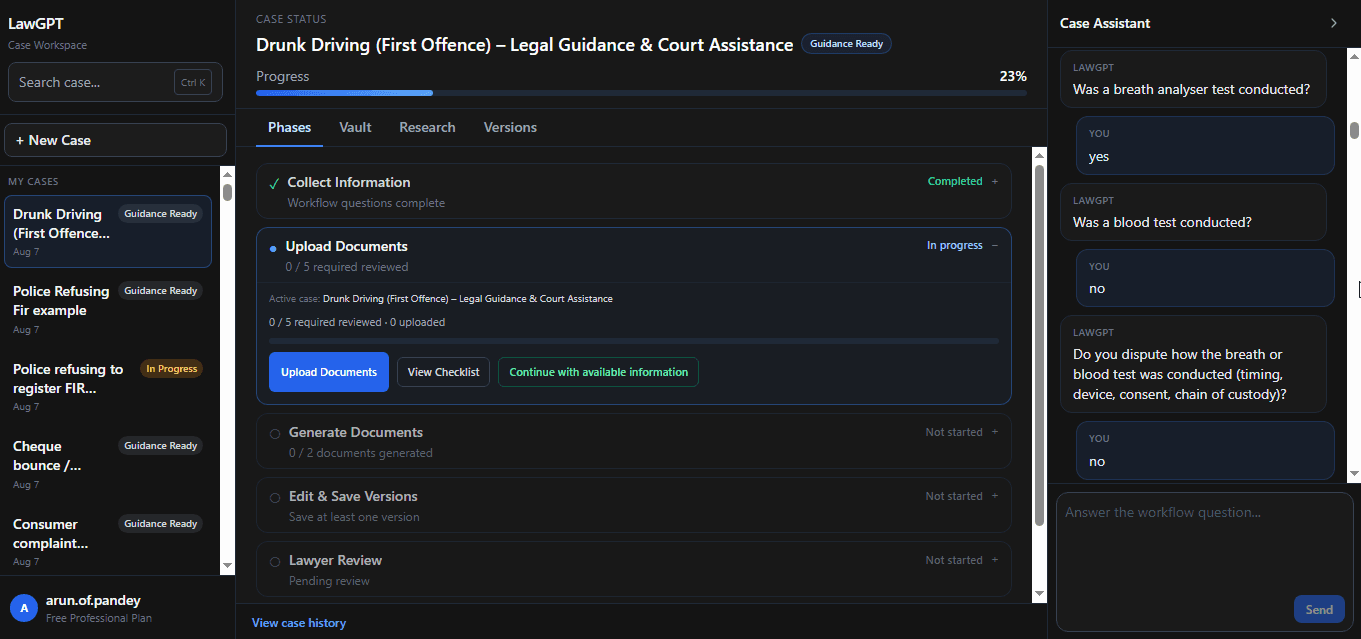
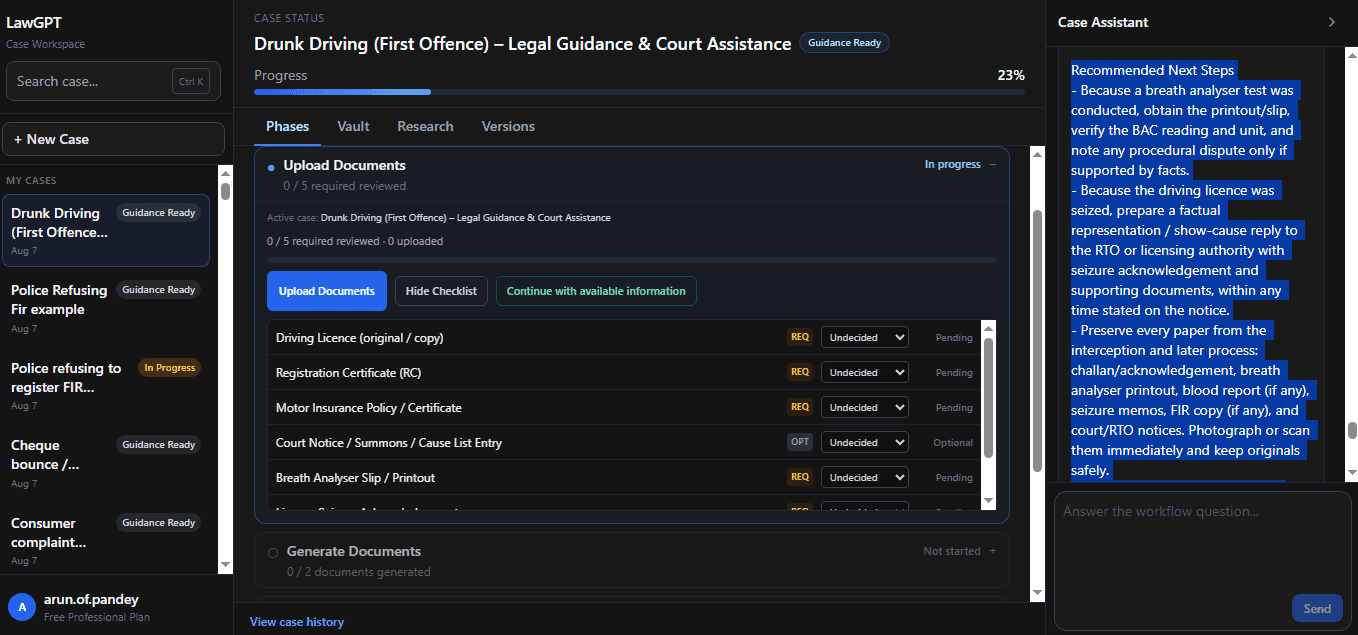
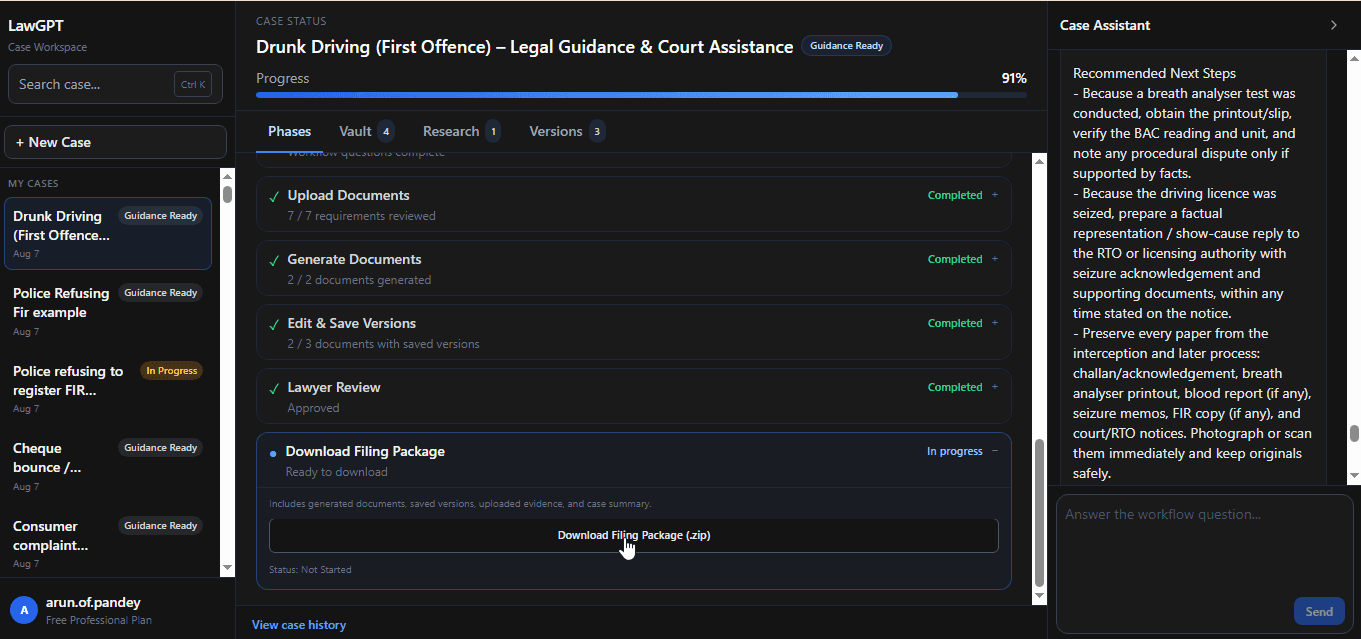
Inside the LawGPT workflow
Frequently asked questions
It is commonly discussed in relation to driving or attempting to drive after alcohol exceeds the prescribed limit, or where drugs impair proper control. Read the exact current law and allegation on official papers.