
Criminal procedure
Citizen Rights When Police Will Not Register an FIR in India
Understand what citizens can ask for at a police station, how to record a refusal, and how cognizable-offence information differs from other complaints.
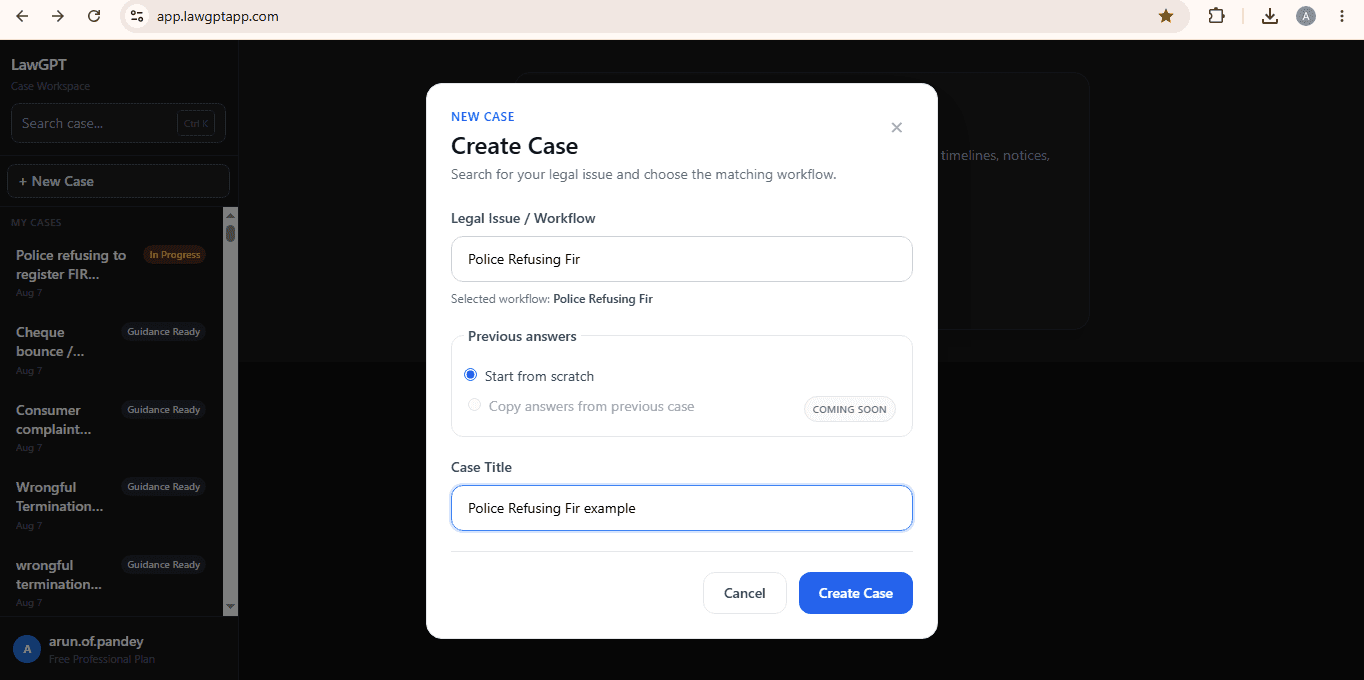
A citizen has the right to approach police with information about an alleged offence and to be treated with dignity. That does not mean every written grievance must instantly be converted into an FIR in the form the complainant prefers. The crucial legal question is whether the information, taken at face value, discloses a cognizable offence and what procedure applies to it. Understanding that distinction prevents two common harms: being improperly turned away from a serious complaint, and being told later that an overbroad allegation was not supported by facts.
At the station, ask for the name of the officer or desk handling your information, the station diary or acknowledgement number if a written paper is accepted, and the name of the station to approach if jurisdiction is said to be elsewhere. Be polite and persistent. Record answers in your own notes after leaving rather than filming staff in a restricted area or arguing. Your goal is a reliable record that a senior officer, lawyer, or court can understand.
Rights that are practical, not theatrical
- To submit a written, legible account with supporting material and retain a copy.
- To ask whether the complaint has been entered, forwarded, or assigned a reference number.
- To receive information about the appropriate station when territorial jurisdiction is raised.
- To seek higher-police or judicial remedies permitted by law when station-level action appears deficient.
- To request assistance and safety support in emergencies; emergency protection should not wait for paperwork.
- To obtain independent legal advice and use an interpreter or support person where needed.
A right is most useful when paired with a responsible request. Instead of saying, “You must register my FIR now,” say, “Please receive this signed information, tell me its diary number, and explain the next step if this station is not competent.” If the officer says that additional verification is needed, ask what information is missing and write it down. If the officer says the matter is non-cognizable, preserve the exact response and take legal advice before assuming it is either correct or dishonest.
Jurisdiction is not always a refusal. Criminal events can involve an online act in one district, a financial loss in another, and a victim in a third. Police procedure has mechanisms for handling information that may fall outside a station's ordinary territorial area. Do not let a jurisdiction discussion become a reason to lose time: request written or recorded guidance, approach the indicated station, and send the same factual packet to the senior authority if you are bounced between offices.
| Your question | Why it matters | What not to do |
|---|---|---|
| “Has my paper been received?” | Creates an audit trail | Demand an FIR number before the facts are even read. |
| “Which station has jurisdiction?” | Avoids repeated visits | Assume the first station can never assist. |
| “Can I have the diary/reference number?” | Links later correspondence | Invent a number if no receipt is issued. |
| “What immediate safety step is available?” | Protects people in urgent cases | Wait for a formal document during an emergency. |
Special care for vulnerable complainants
Survivors of sexual violence, children, older persons, persons with disabilities, and people facing domestic or caste-based violence may have additional procedural protections and support mechanisms. The details depend on the allegation and statute. Do not rely on a generic guide to choose the correct route. Seek immediate support from emergency services, a lawyer, a trusted support organisation, or the appropriate statutory authority. Preserve privacy: sharing names, addresses, medical records, or intimate images on social media can deepen harm and may be unlawful.
If you are supporting someone else, do not take over their account. Help preserve dates, hospital papers, messages, and contact information, but let the affected person make choices where possible. A support person can accompany a complainant, take notes, arrange transport, and help maintain a document log. They should not coach a witness to change facts or circulate allegations to pressure an outcome.
Your rights-focused station-visit file
- Two signed copies of the complaint
- Government ID only if relevant or requested lawfully
- A dated annexure list
- Photos/scans of evidence, with originals preserved separately
- A notebook for time, names, and directions given
- Emergency contacts and advocate details where risk is high
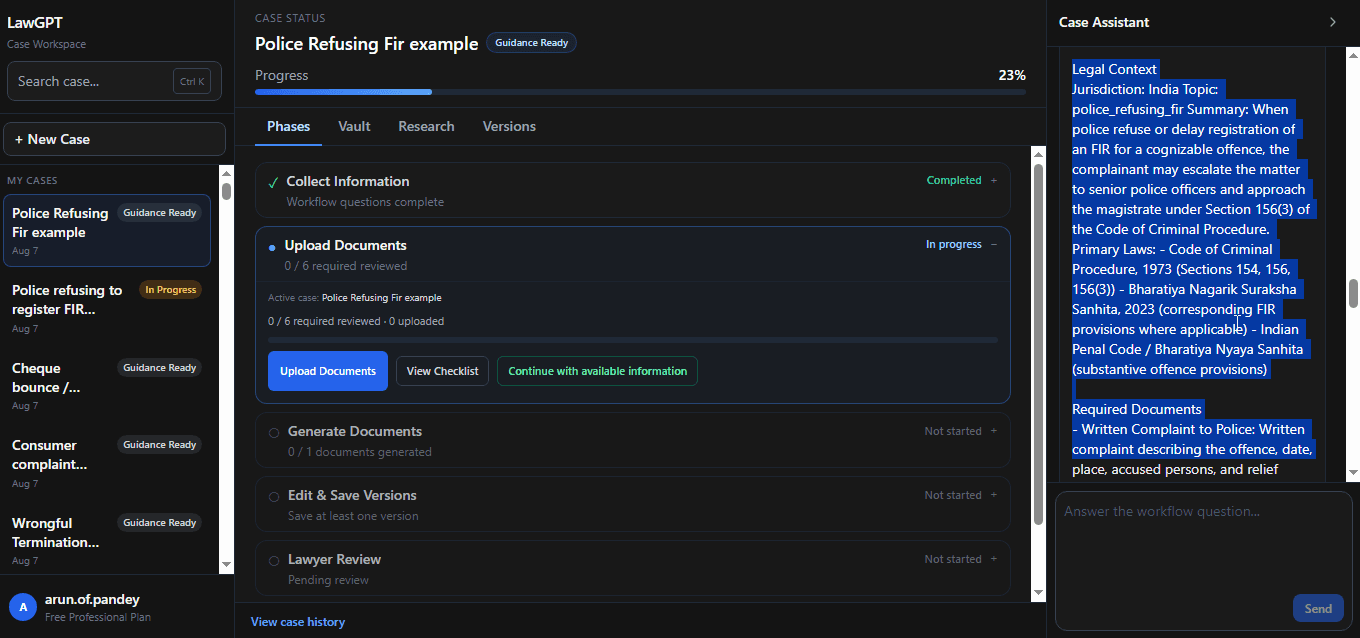
Rights work best with a clear request
At a station, a short request can be more effective than a legal argument. Ask staff to receive the signed information, provide a diary or reference number if one is created, and indicate the next official step. If a different station is named, record its name and the reason given. If papers are not accepted, keep your own signed copy and make a prompt factual note instead of escalating an argument at the counter.
Dignity includes the right to be treated respectfully, but it also includes protecting your own privacy. Take a support person where appropriate, ask for language or accessibility assistance if needed, and limit sensitive disclosures to the authority, counsel, or support service that needs them. Avoid publishing an identity, medical history, or allegation online simply to prove that you approached police.
Jurisdiction should produce a route, not a dead end
An event may connect several places: the act, communication, receipt of a message, financial loss, residence, hospital, or location of a witness. Give every relevant location to an advocate and ask the station to identify the appropriate route. Do not silently change the location in a later complaint to make filing easier. A complete geography helps authorities and courts assess jurisdiction lawfully.
Where you are redirected, preserve the first approach and promptly use the indicated official channel. If repeated redirection leaves a serious complaint unaddressed, that chronology can be important for a senior-officer consultation or judicial advice.
If the answer is still no
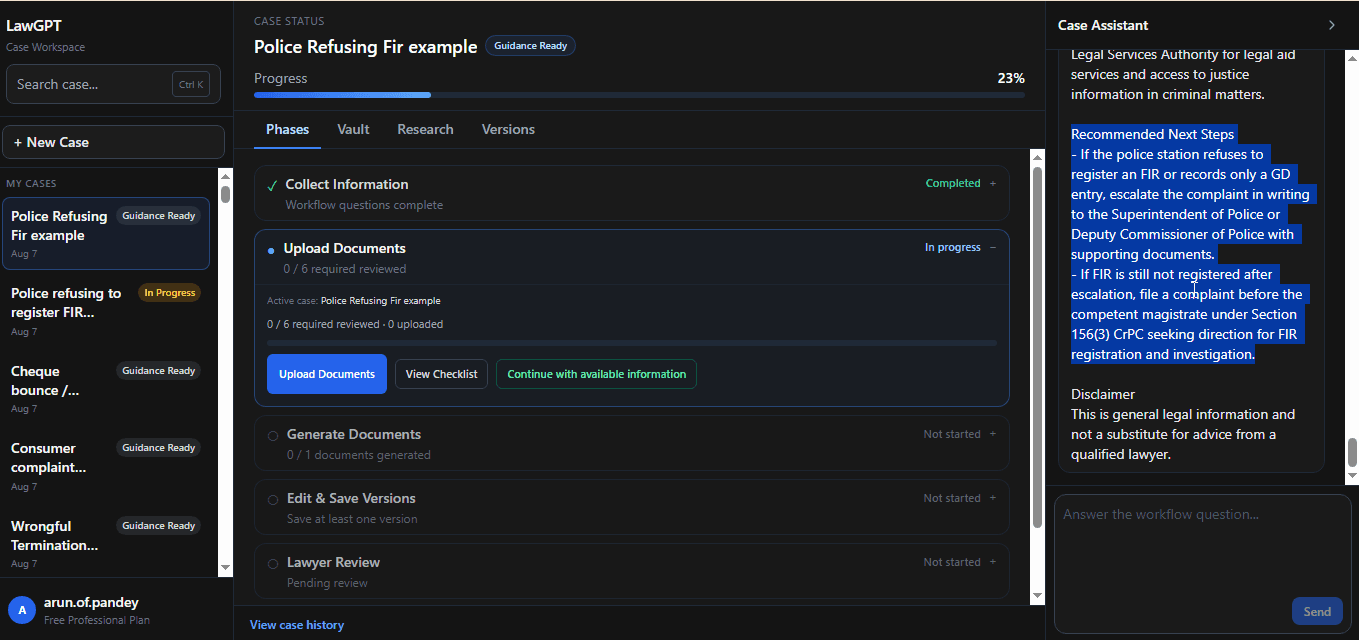
A refusal is not cured by repeated visits alone. Move from oral discussion to traceable writing. Send the complaint, the refusal note, and delivery proof to the Superintendent of Police or designated senior authority. Ask for lawful consideration and identify any urgent preservation issue. If you later consult an advocate about a Magistrate application, the same dated record shows that you tried the police route responsibly.
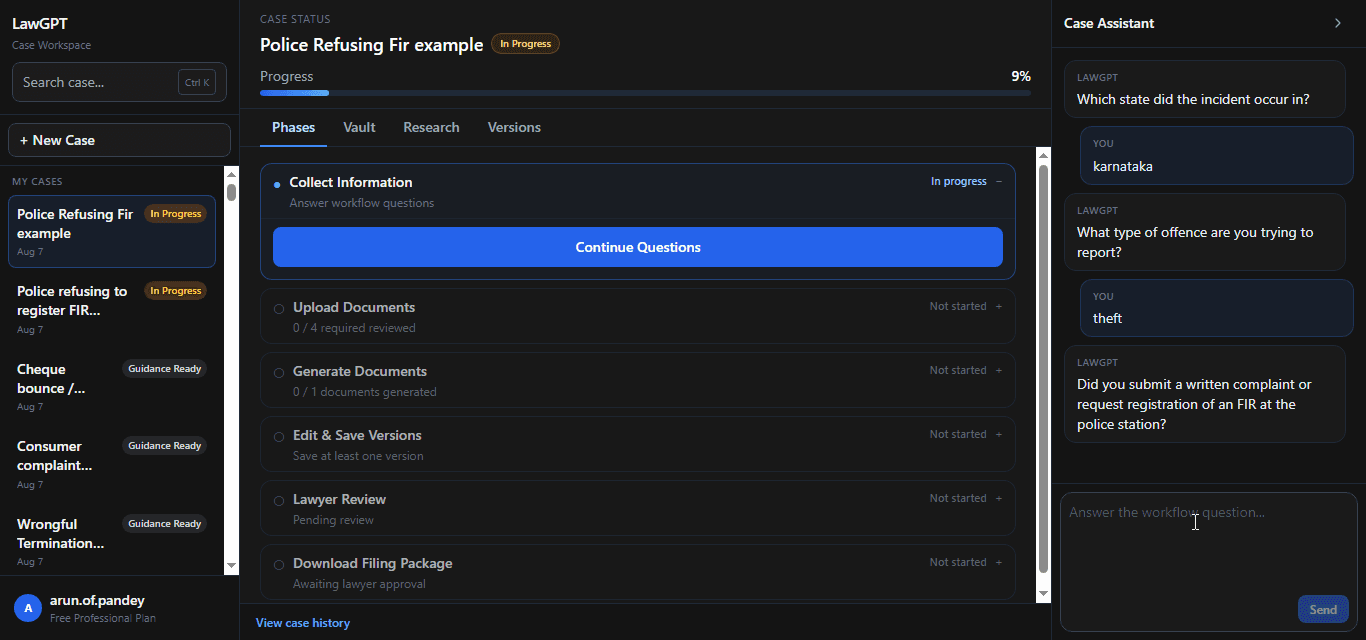
Use the Police Refusing FIR workflow to organise the complaint and annexures before escalation. It is an organisational tool, not a promise that an authority will take any particular action.
Inside the LawGPT workflow
Frequently asked questions
Once an FIR is registered, access to a copy follows applicable law and local practice. Ask the station or counsel for the correct process.