
Criminal procedure
Police Refusing to Register FIR: Complete India Guide to Rights and Escalation
A practical, evidence-first guide for when a police station will not record a cognizable-offence complaint: station visit, written record, SP escalation, Magistrate route, and safety planning.
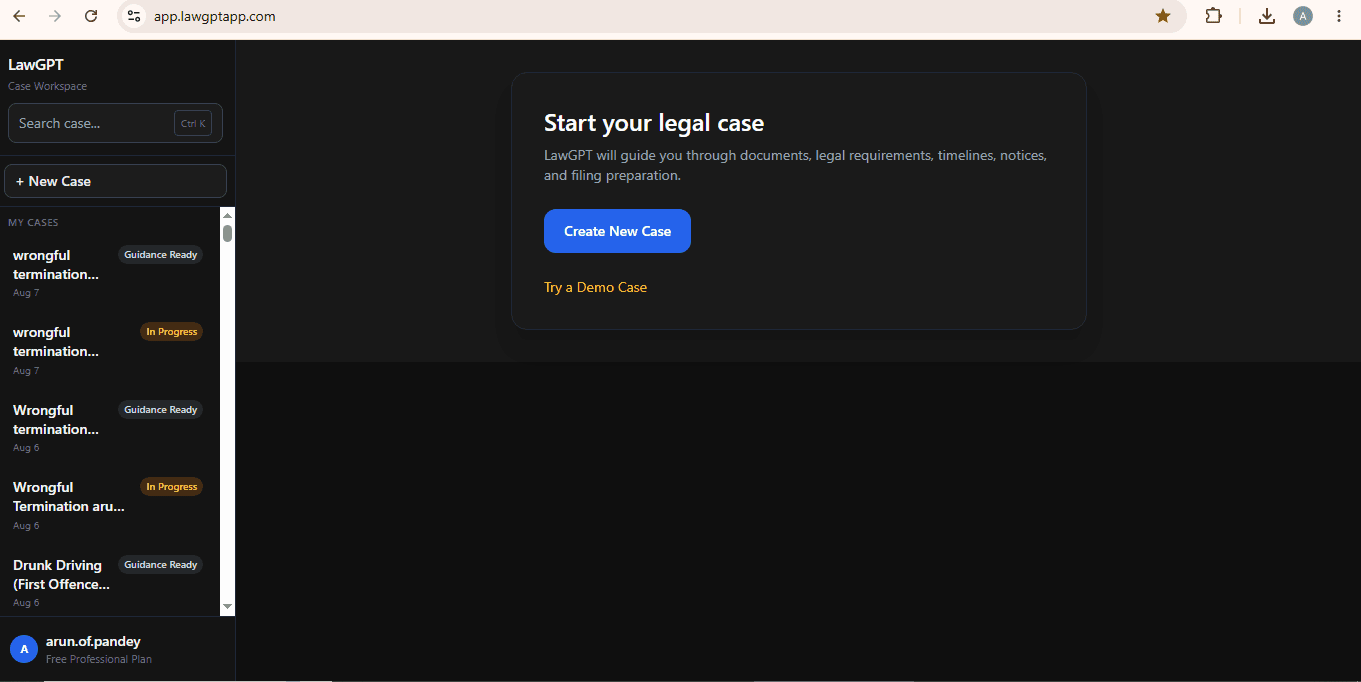
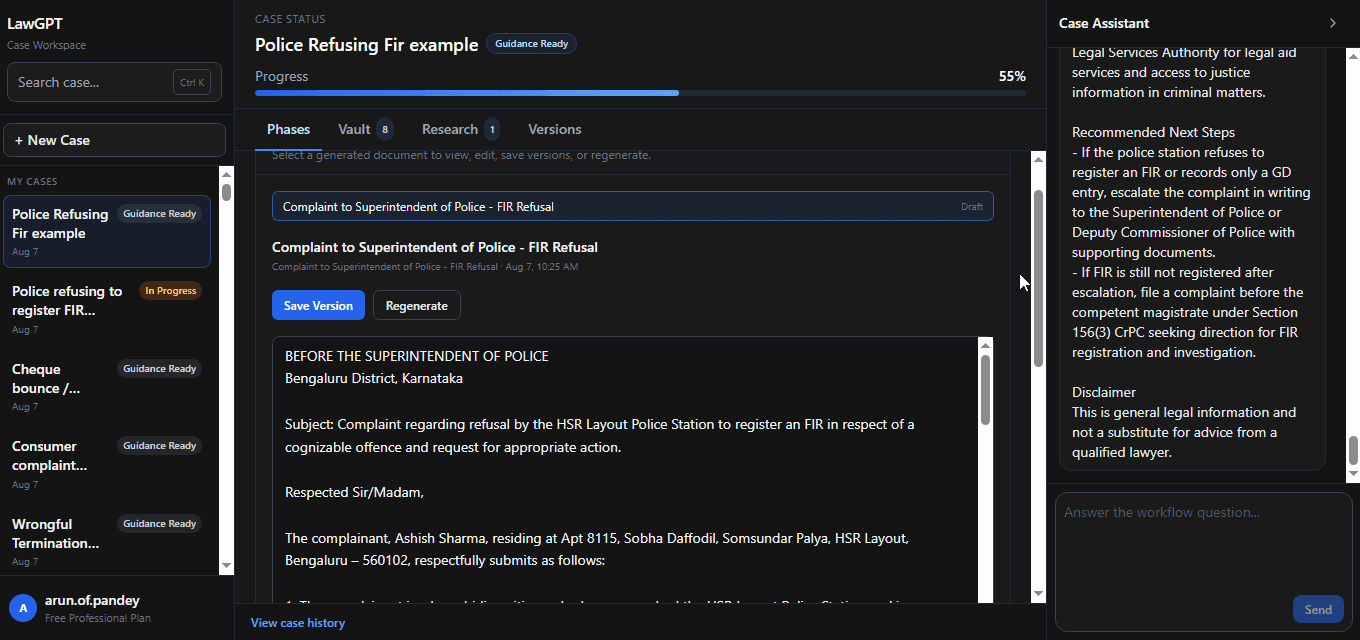
Police Refusing FIR tutorial · 3 min · plays inside LawGPT
A refusal to register an FIR can feel like the legal system has closed its door. It has not. Indian criminal procedure gives a complainant several routes, but the right route starts with a careful distinction: information disclosing a cognizable offence is treated differently from a non-cognizable dispute, a civil disagreement, an incomplete account, or an allegation outside the station's territorial area. A police officer may ask questions, seek documents, or direct a person to the appropriate station; none of those practical realities makes it sensible to leave without recording what was offered, to whom, and when.
This guide is general education, not a substitute for an advocate who can read your facts and local practice. India has moved from the CrPC framework to the Bharatiya Nagarik Suraksha Sanhita, 2023 (BNSS), with transition and interpretation questions that can matter in a live case. You will therefore see functional descriptions such as station-level recording, complaint to the Superintendent of Police, and application to the Magistrate. Before filing, a lawyer should confirm the provision, court format, limitation position, and State-specific police rules that apply on your date.
First decide what the refusal actually means
People often use the word “refusal” for four different events: the desk officer would not accept papers; staff accepted them but gave no diary or receiving number; police registered a non-cognizable entry rather than an FIR; or officers said preliminary verification was required. Your next document should describe the event precisely. “They refused” is weaker than “On 4 June at 3:15 pm, I gave a signed two-page complaint at X Police Station to the duty officer, who declined to issue any acknowledgement and stated that the matter was civil.” Exact language is easier for a senior officer or court to evaluate.
Do not try to solve classification by adding dramatic allegations you cannot support. State the acts, dates, places, persons, losses or injuries, threats, and available material. If the facts disclose a cognizable offence, registration is generally the expected starting point; if a legal assessment is needed, police may follow the lawful process applicable to that category. A complaint need not contain section numbers. It does need a coherent factual narrative that lets an officer see why urgent investigation, preservation of evidence, or protection may be necessary.
| Situation | What to record | Safe next move |
|---|---|---|
| Paper not accepted | Officer/station, date, time, witnesses, copy carried | Send the same signed complaint by traceable post or email where officially accepted. |
| Paper accepted, no receipt | Photo of first page, diary counter details, names spoken to | Ask politely for diary/GD/DD number and preserve any acknowledgement. |
| Called a civil matter | Exact reason stated and facts showing alleged criminal conduct | Prepare an SP complaint focused on conduct, not labels. |
| Wrong jurisdiction stated | Station named as proper forum and reason provided | Approach that station; preserve proof of the first approach. |
The first 24 hours: protect people, proof, and chronology
Immediate FIR-refusal checklist
- If anyone faces immediate danger, call emergency services and move to a safe place; escalation paperwork is not a safety plan.
- Write a chronological account while memory is fresh, separating what you saw from what another person told you.
- Keep the original complaint, signed copies, delivery proof, screenshots, medical papers, and a list of witnesses.
- Back up digital files without editing originals; preserve device, account, URL, date, and time information.
- Do not threaten officers, accused persons, or witnesses online, and do not publish sensitive material merely to create pressure.
- Consult a qualified criminal-law advocate promptly where violence, sexual offences, child safety, custody, property seizure, or retaliation is involved.
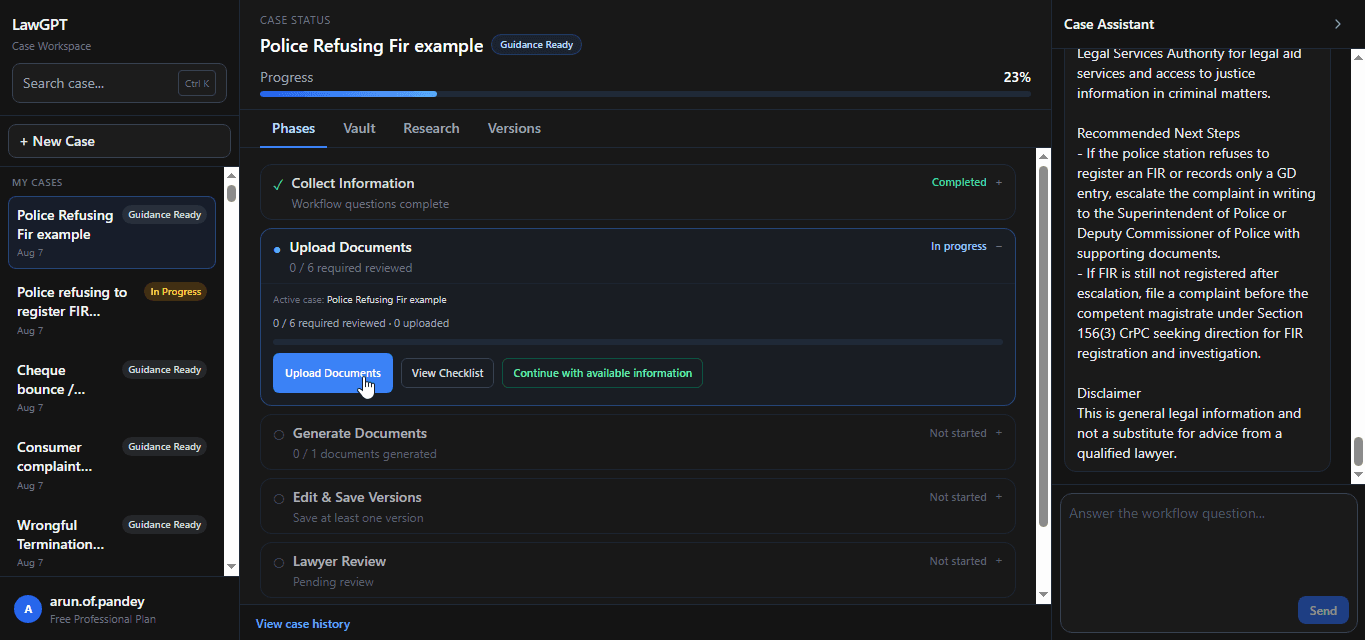
A disciplined escalation ladder
A practical sequence is usually: make or tender a signed station complaint; preserve proof of delivery or refusal; send a complete copy to the Superintendent of Police or other senior officer having statutory supervisory authority; then seek legal advice about an application before the competent Magistrate if the statutory route has not produced action. This is a sequence, not a delay tactic. In a genuine emergency, safety, medical care, emergency contact, and urgent legal assistance come first. In some matters, special laws or courts create additional routes.
The senior-officer complaint should not be a fresh emotional story. Attach the station complaint as Annexure A, delivery evidence as Annexure B, and relevant supporting material in numbered annexures. Request that the information be assessed and dealt with according to law, that the receiving station be identified if jurisdiction is disputed, and that you be informed of action. Avoid demanding a predetermined offence section or the arrest of a named person. Those demands can distract from the central question: whether the disclosed facts require lawful registration and investigation.
- Prepare a fact-only station complaint with your contact information, dates, places, persons, and a list of annexures.
- Tender it safely, request an acknowledgement, and note the result without confrontation.
- Create a contemporaneous refusal note and retain proof of any postal, courier, or official electronic submission.
- Send a legible, indexed escalation packet to the senior police authority with a concise covering request.
- Obtain advocate advice on the Magistrate route, jurisdiction, affidavit requirements, and any other remedy if there is no meaningful response.
What a Magistrate-focused consultation involves
A Magistrate application is not simply another complaint counter. Counsel will examine whether the material discloses an offence, whether prior police approaches are documented, which court has territorial and subject-matter competence, whether sworn material is required, and whether another remedy is more suitable. A court may seek a report, take a complaint route, issue directions permitted by law, or decline a request; the outcome depends on the record and legal framework. Do not promise a guaranteed FIR or quote a court order from social media as if it controls every case.
Bring your lawyer an organised file rather than fifty unsorted chat screenshots. Include the original message exports where possible, a one-page chronology, identity and address materials, medical records, photographs with source details, names and contact details of witnesses, and delivery proofs. Explain weaknesses as well as strengths. If a prior complaint contains an error, identify it early; a corrected clarification is usually safer than letting a contradiction surface later.
Evidence preservation and lawful communication
A complaint is only the beginning of an investigation. Preserve what could disappear: CCTV may overwrite, call records may be retained only under process, online content may change, injuries may heal, and witnesses may relocate. Ask an advocate about the lawful way to seek preservation. Do not access another person's accounts, install tracking tools, impersonate someone, or circulate intimate or confidential material. A complainant can damage an otherwise genuine case by collecting proof unlawfully.
Keep communications measured. If the accused contacts you, save the message and avoid a running argument. If police call, note the time, caller identity, instruction, and what you said. Where you are asked to attend, obtain legal advice if possible and take your own copy of documents. Cooperation is not the same as surrendering originals without a receipt or signing a statement you have not read.
How LawGPT can help with organisation
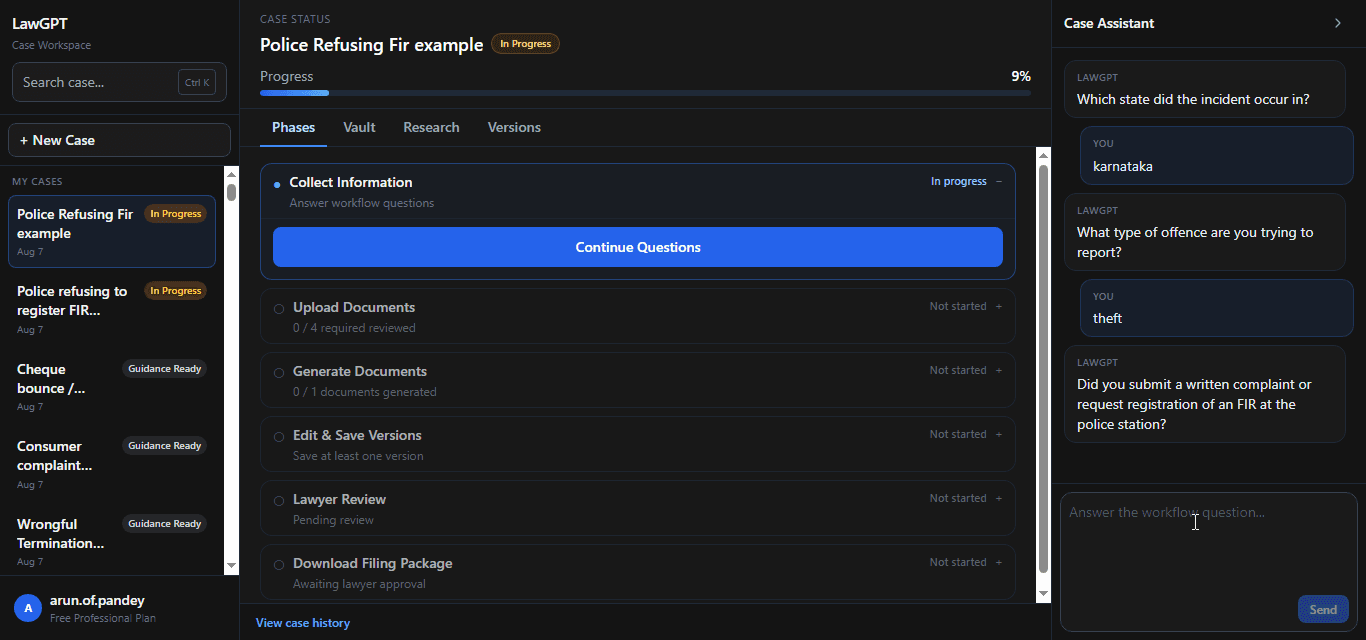
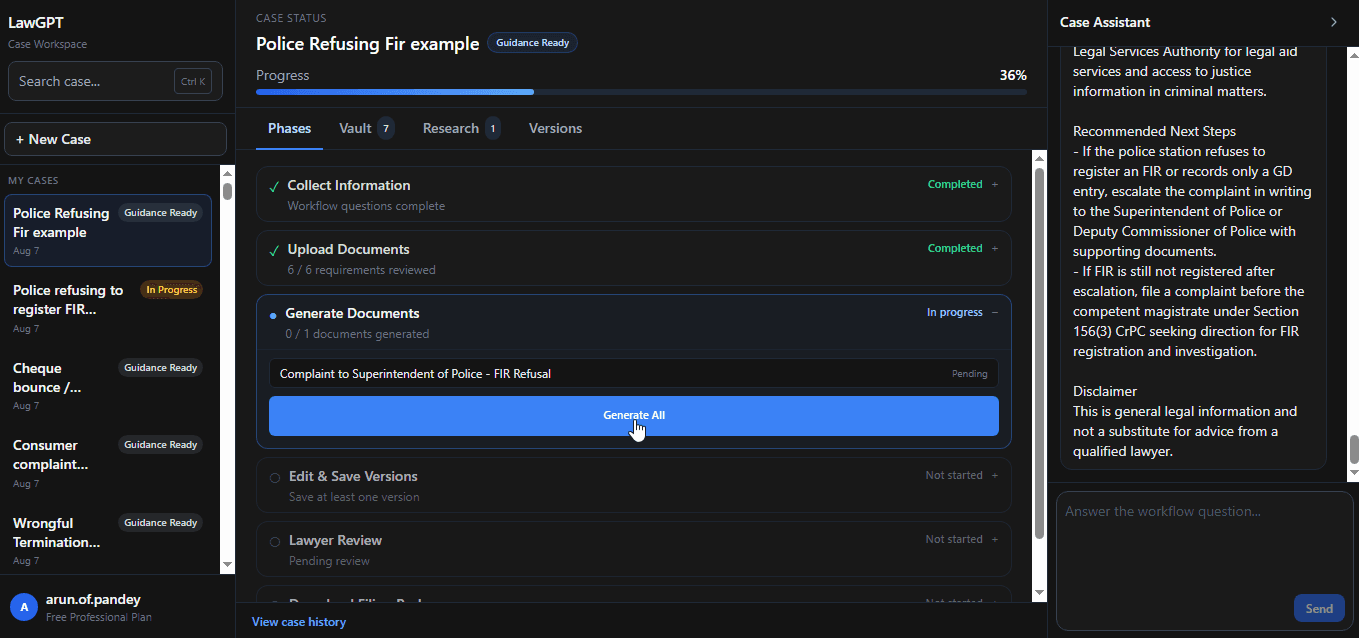
The Police Refusing FIR workflow on LawGPT can help you structure a timeline, identify missing documents, prepare a senior-officer complaint draft, and download an indexed package for advocate review. It does not decide whether an FIR must be registered, communicate with police on your behalf, or replace court representation.
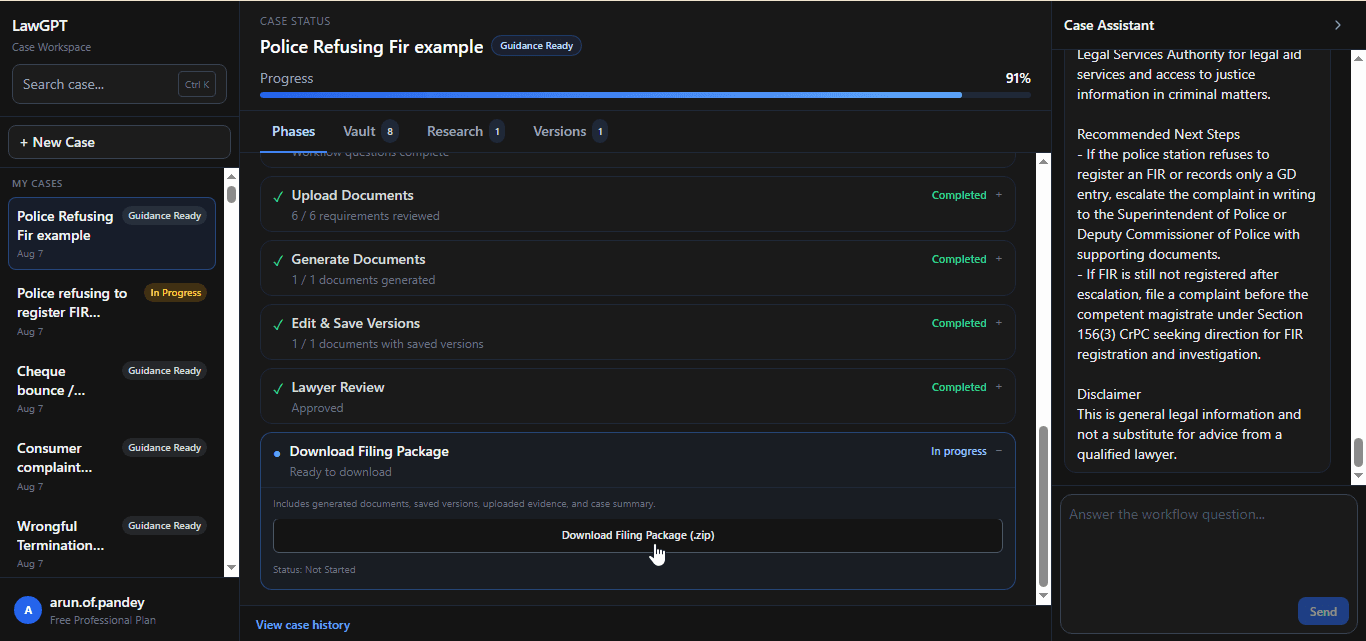
Make the record usable for the next decision
A refusal file should let a new reader understand the matter without relying on your memory. Keep a front page with the incident date, station visit, person contacted if known, complaint-delivery method, immediate risk, and the next proposed step. Attach the original station complaint behind it rather than rewriting it into a more dramatic form. If facts change, preserve the earlier version and add a dated supplement explaining what is new and how you learned it.
This organisation also protects against an avoidable problem: confusing an allegation with proof. Your complaint may identify information that requires lawful action, while documents, witnesses, and investigation determine what can ultimately be established. Honest labels—“I saw,” “I was told,” “the attached record shows,” and “I do not know”—make the file more credible than certainty that the material cannot support.
Safety and evidence can require parallel action
An escalation route is not a reason to wait where there is continuing violence, stalking, coercion, child risk, medical need, or a specific threat. Contact emergency services, move to a safer place, tell a trusted person, and seek specialist or legal support. Preserve messages and incident details only when doing so is safe. Do not return to a dangerous location to obtain a better photograph, force a confrontation, or collect a document.
For evidence that may disappear, identify the exact risk in writing: a camera location and time range, a named platform post, a hospital record, a witness leaving town, or a device in another person's lawful custody. Ask counsel about lawful preservation. A private complainant should never access accounts, seize property, use tracking software, or pressure a custodian to alter or hand over material.
Inside the LawGPT workflow
Frequently asked questions
No label ends the analysis. A transaction may have civil remedies and still disclose criminal conduct. State specific acts and obtain legal advice on the facts.