
Criminal procedure
FIR Refusal Timeline: From Police Station Visit to Lawful Escalation
A time-based action plan for FIR refusal: immediate safety, first-day record keeping, senior-police escalation, evidence preservation, and court consultation.
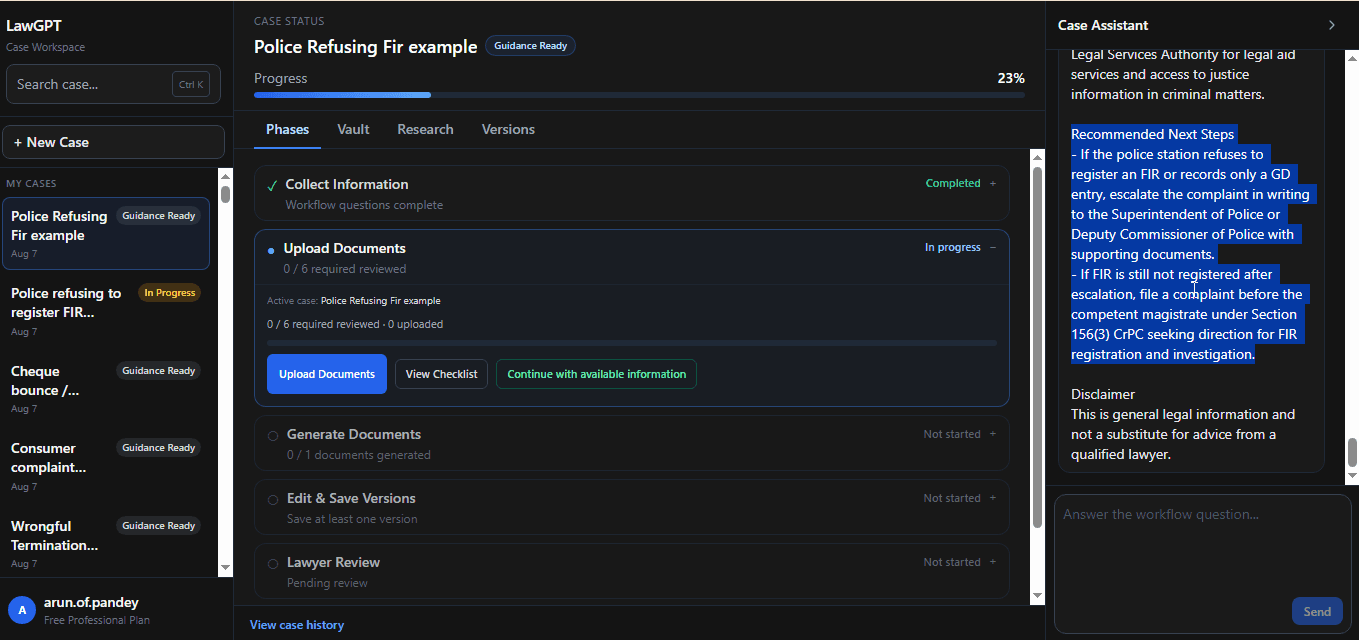
There is no single statutory stopwatch for every complaint, but delay can change real-world outcomes. CCTV loops overwrite, physical injuries change, account records disappear, and witnesses forget. The right response to an FIR refusal is therefore not random urgency; it is a dated plan. Some matters need emergency help at once, while others need a careful written file before escalation. This guide helps you distinguish those tracks without promising a fixed outcome.
Use calendar dates, not labels such as “yesterday” or “last week.” Place every event in a timeline: incident, hospital visit, station approach, call from police, senior-officer dispatch, response, and lawyer consultation. Add a source beside each entry—your note, a message, a receipt, a witness, or a document. This prevents accidental contradictions when you later prepare an SP complaint or court papers.
Hour 0 to 24: safety and first record
- Move to safety and contact emergency services if there is an immediate threat, injury, child-risk, or ongoing violence.
- Write the incident sequence and station interaction separately; do not blend what happened with what the officer said.
- Photograph or scan every paper before it is misplaced and back up digital material without editing it.
- List evidence at risk of disappearance, such as a named CCTV camera, platform account, location, or witness.
- Arrange an advocate consultation quickly in serious, sensitive, or retaliatory cases.
Day 1 to 3: make the paper trail traceable
If the station did not accept your complaint or did not give a reference, prepare a clean signed copy and use a lawful traceable delivery channel advised for your jurisdiction. Preserve the envelope, receipt, tracking page, portal confirmation, or official email record. Do not repeatedly rewrite the facts because friends suggest better words. If new evidence emerges, add it as a dated supplement rather than silently replacing the original.
This is the point to identify whether you visited the correct station, whether a different district is involved, and whether an urgency or preservation request should accompany escalation. A quick consultation can prevent a week of filing at an incorrect address. It can also help you avoid contacting the accused in a way that escalates danger or compromises digital evidence.
| Time band | Primary objective | Useful output |
|---|---|---|
| First day | Safety and memory preservation | Incident note, station note, backup folder |
| Days 1–3 | Traceable official approach | Signed complaint and delivery proof |
| Days 3–10 | Senior-officer escalation where appropriate | Indexed SP packet and dispatch log |
| After response/no response | Legal route assessment | Advocate opinion and forum plan |
| Throughout | Evidence and safety management | Updated chronology, no retaliation or alteration |
After senior-police escalation
Avoid treating silence as a signal to flood every authority daily. Track your submitted material, follow a reasonable and documented follow-up process, and preserve any response. If police ask you to attend, prepare copies, ask the purpose of the visit if appropriate, and consult counsel before signing a statement you do not understand. A genuine inquiry may require cooperation; cooperation should be informed and documented.
If a serious complaint remains unaddressed, take advice on the Magistrate route and other remedies. Your lawyer will consider the facts, current procedural law, territorial jurisdiction, special statutes, and whether the police record is sufficient. A court filing should update the timeline through the filing date; leaving out a new call, response, or meeting can create confusion.
Longer-term discipline
Put every appointment and court date in two calendars. Keep the latest contact details of witnesses and do not pressure them to support a particular narrative. If you move, change phone numbers, or learn that a key video has been deleted, tell counsel. Keep expenses and original documents in an orderly folder. A case may take longer than expected, and the person with the best contemporaneous record usually has fewer avoidable problems.
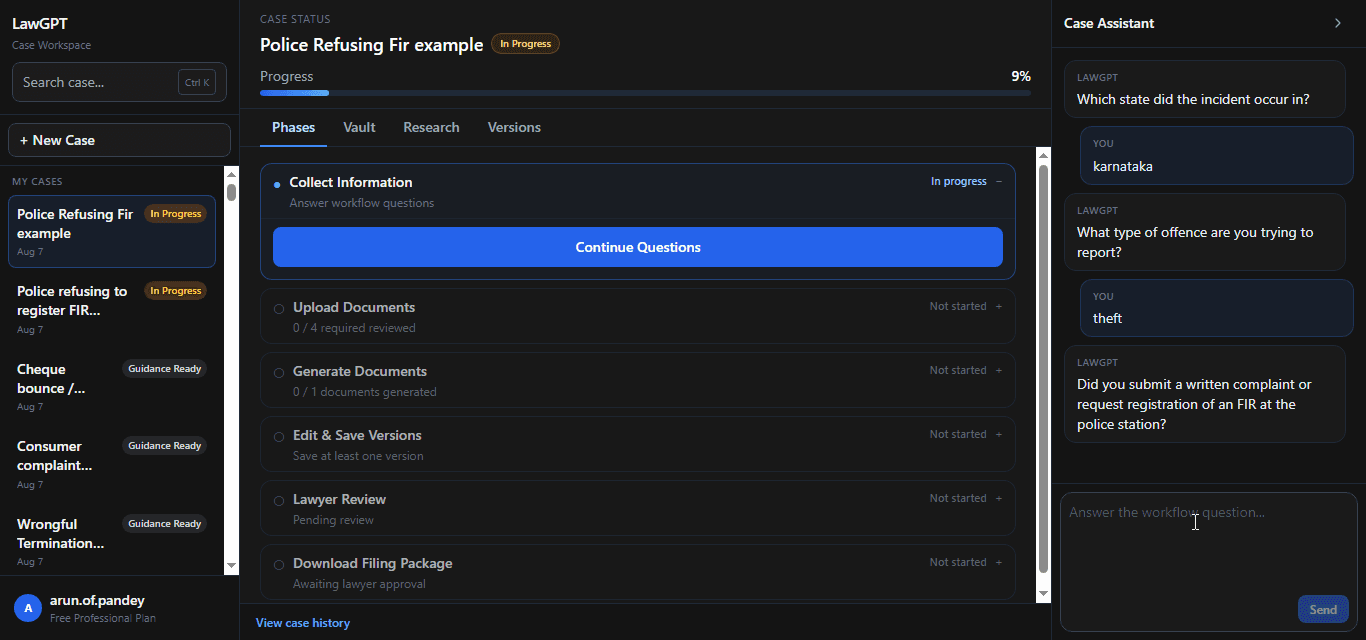
LawGPT's Police Refusing FIR workflow can hold your chronology, uploads, and a document checklist in one place. It does not monitor government deadlines or send filings for you.
Use each time band for a different task
The first day is usually for safety, medical care, a factual account, and protecting obvious evidence. The next few days are for a stable written complaint, delivery proof, and a considered decision about senior-officer escalation. Later stages may involve a response, a request for more material, a lawyer consultation, or court advice. Keeping these tasks separate prevents an urgent call from being lost in an otherwise orderly file.
Your timeline should identify not only what happened, but the source for each date. Mark whether it comes from a receipt, a phone record, a message, a hospital paper, a witness, or your own note. If you later correct a date, record the reason. This is more credible than silently changing a chronology after a contradiction is noticed.
Delay needs explanation, not panic
A delayed approach can happen because of injury, fear, threats, travel, disability, lack of access, or late discovery of facts. Preserve the honest reason and discuss it with counsel. Do not backdate papers to make a timeline look cleaner. Equally, do not assume delay prevents all lawful action; the significance depends on facts and procedure.
If an authority asks you to attend, note the instruction, purpose if stated, and documents requested. Arrange support and advice where needed, take copies rather than originals unless a receipt is provided, and update the timeline immediately afterwards.
Inside the LawGPT workflow
Frequently asked questions
There is no safe universal number. Urgency, evidence risk, and local practice matter; seek advocate advice rather than waiting indefinitely.