
Consumer Law
Consumer Commission Process in India: Step by Step
How District, State, and National Consumer Disputes Redressal Commissions work—filing, notices, mediation, evidence, and orders.
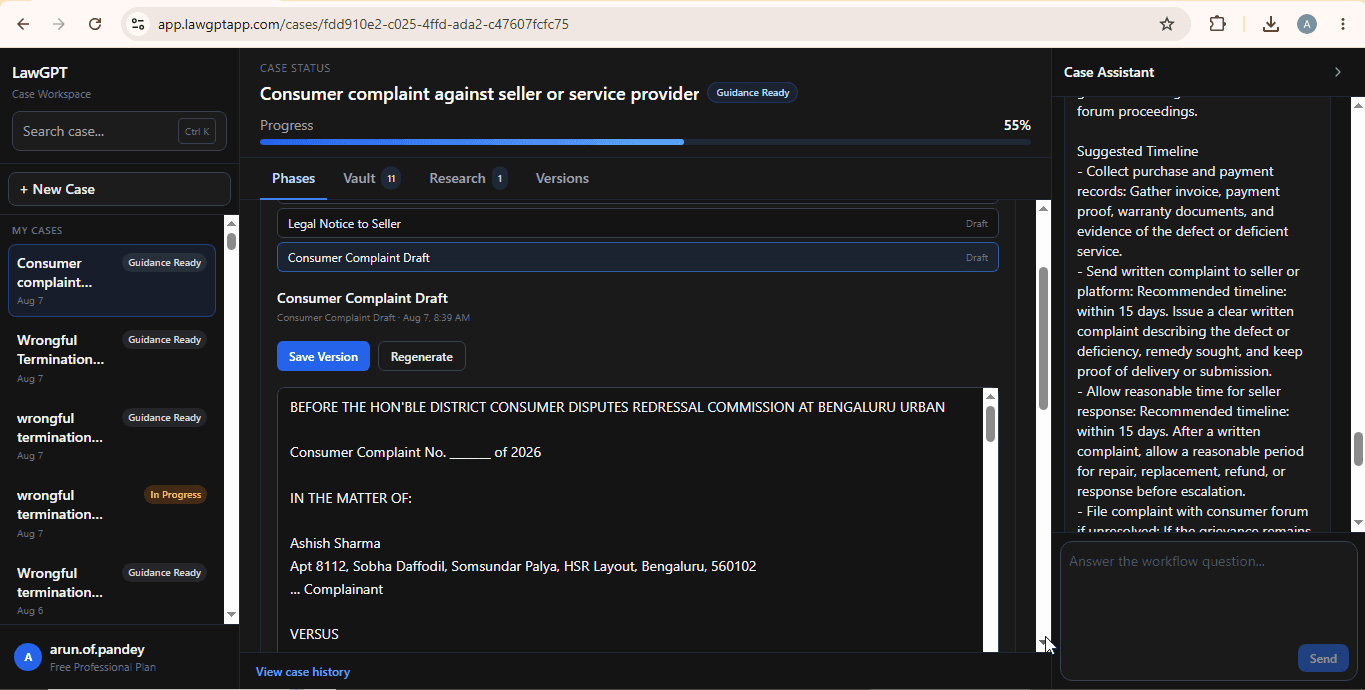
Consumer commissions exist to give buyers and service users a focused forum. The process is more approachable than a full civil trial, but it is still a legal proceeding with pleadings, evidence, and enforceable orders. This guide walks through the typical journey so you know what “filing a consumer case” actually involves.
Choose the right tier
District, State, and National commissions divide work partly by the value of goods or services paid and compensation claimed. Filing in the wrong tier wastes time. Recheck current pecuniary thresholds before you draft, because limits have evolved under the 2019 framework and notifications. When in doubt, calculate conservatively and verify against official sources.
Territorial jurisdiction
You generally look at where the opposite party resides or carries on business, or where the cause of action arose. E-commerce facts often support consumer-friendly interpretations, but do not treat internet purchases as automatically filing-anywhere without reading current rules. Name the correct legal entities from invoices and legal pages.
| Stage | What happens | Your job |
|---|---|---|
| Filing | Complaint + fee + annexures | Accuracy and indexing |
| Admission / scrutiny | Defects may be pointed out | Cure defects fast |
| Notice | Opposite parties called | Track service |
| Mediation / settlement window | Compromise exploration | Know your floor |
| Pleadings complete | Written versions / replies | Stay consistent |
| Evidence & arguments | Proof and hearing | Bring witnesses if needed |
| Order | Relief or dismissal | Collect certified copy |
| Execution / appeal | Enforce or challenge | Diary limitation |
Filing mechanics
Many jurisdictions support e-filing portals alongside physical filing. Your complaint should identify parties, facts, grounds, and prayers. Affidavits and fee calculations matter. Incomplete annexures cause defect memos. Keep a mirror set of everything uploaded.
Mediation mindset
Settlement is common and often encouraged. Arrive with a number and non-money asks (apology letter rarely matters; replacement or written refund timeline does). If mediation fails, you should be ready to prove—not merely repeat—your case.
Evidence hearing practicalities
Produce invoices, chats, expert reports, and affidavits as required. If you need the product inspected, request directions early. Corporate respondents may file lengthy replies; mark denials that are bare and push for production of internal tickets when relevant.
Commission hearing kit
- Complaint and all orders to date
- Indexed annexure folder with page numbers
- Chronology one-pager for quick reference
- Settlement authority or clear instructions
- ID and authorisation if representative appears
- Notebook for next-date diary
Orders and what comes next
A favourable order may direct refund, replacement, compensation, or compliance steps. If the business ignores the order, execution mechanisms exist—do not assume payment is automatic. If you lose on maintainability or proof, evaluate appeal timelines calmly rather than relaunching identical facts elsewhere inconsistently.
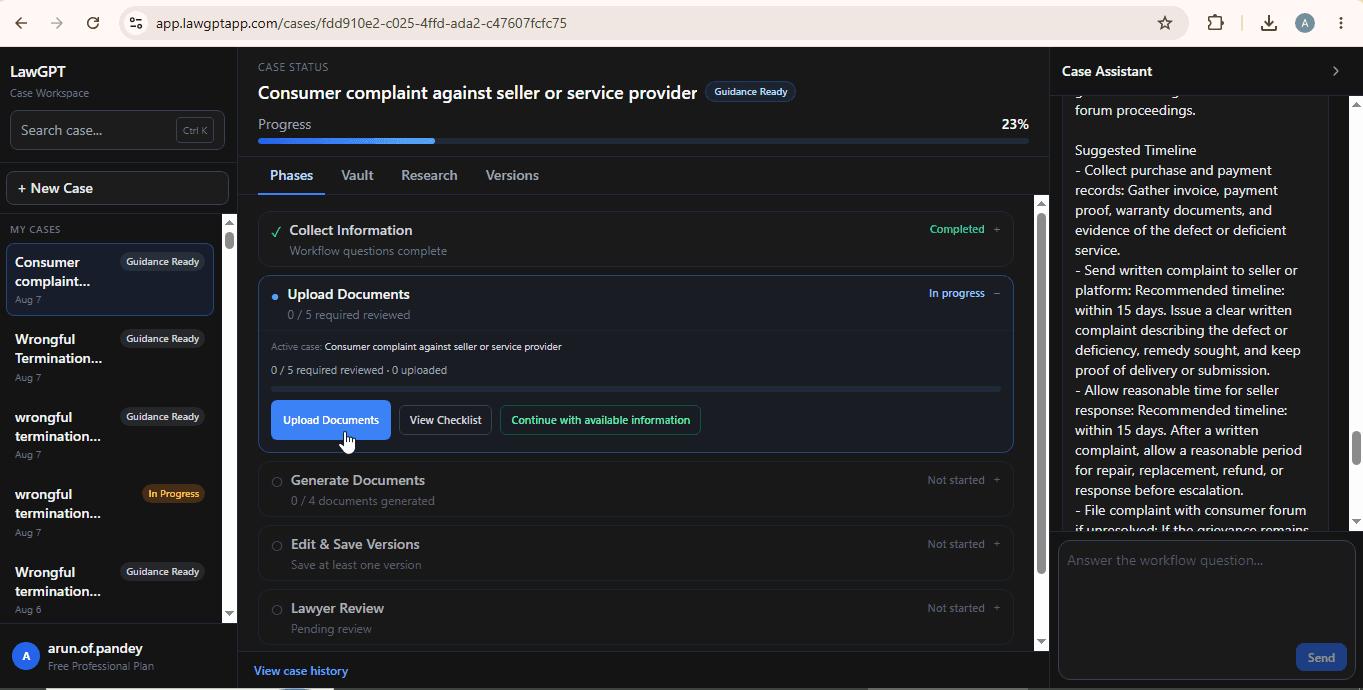
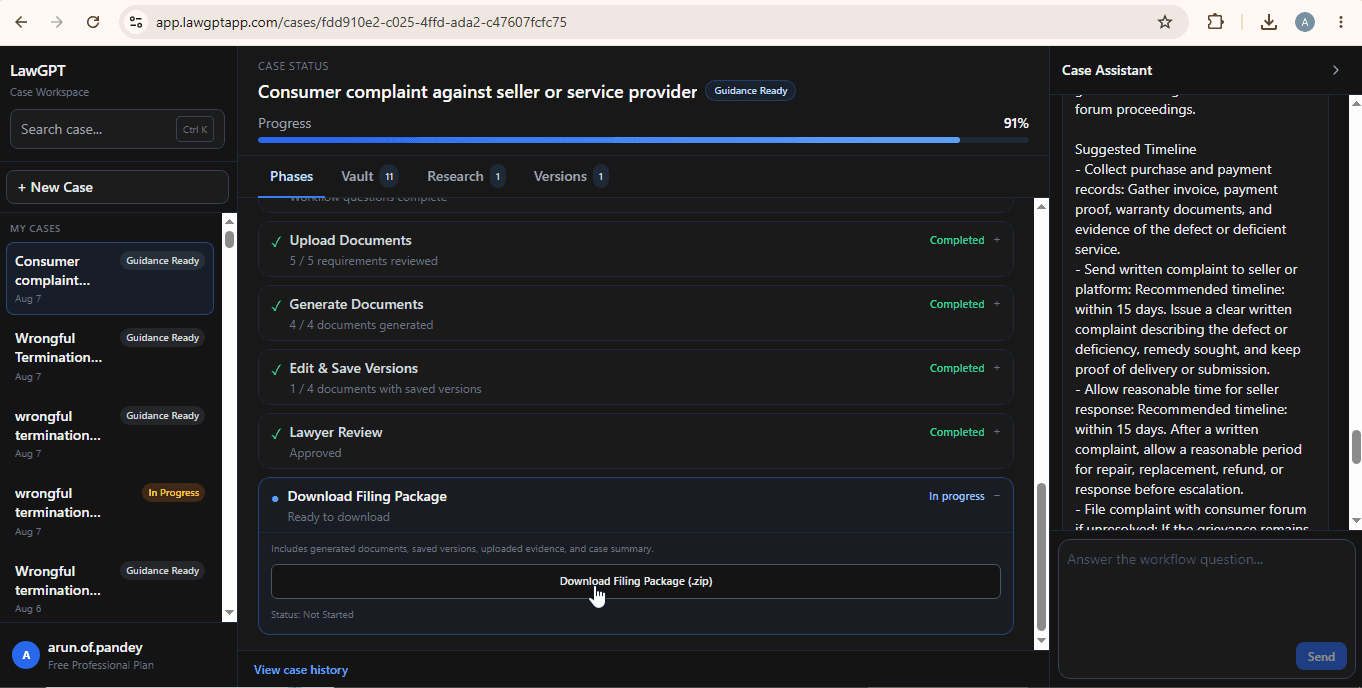
LawGPT’s /workflows/consumer-complaint path prepares the complaint package and aligned notice history; /platform supports review before you commit to a tier and party list. Procedure still requires you to file, attend, and comply with local registry practice.
Time and expectation setting
Some matters settle in weeks after notice; contested commission cases can take longer depending on docket load. Organisation shortens your personal timeline even when the institution is slow. Persist without harassment; professionalism helps commissioners help you.
Drafting prayers the registry can understand
Prayers should be numbered and enforceable: refund ₹X with interest at a stated rate from a stated date if claimed; replacement of model Y; direction to cease a deficient practice; compensation ₹Z with reasons; costs. Avoid open-ended asks like “pass any other order in the interest of justice” as your only real prayer—those words can be residual, not primary. If you seek interim relief, explain urgency with facts (ongoing safety risk, exam deadline, medical need), not adjectives.
Fee calculation errors delay admission. Recheck slabs for your claim value. Keep payment receipts inside the file. If you e-file, save the acknowledgment PDF the same day; portals can be hard to re-navigate later.
Written versions, evidence affidavits, and marking exhibits
Practice varies, but you will often need a verified complaint, possibly a evidence affidavit, and a system for marking exhibits. Use consistent exhibit numbers from day one. When the opposite party files a reply denying everything without documents, point out bare denials and seek production of their ticket logs. Do not assume the commission will dig through a pendrive of unsorted photos—help them help you.
Adjournments and how not to waste them
- Seek adjournment in advance with reasons when truly needed
- Use the gap to cure evidence gaps, not to ignore the case
- Object politely to repeated dilatory adjournments by the other side
- Never assume “next month” means you can stop preparing
Adjournment culture can slow consumer cases. Your antidote is readiness to proceed on every date. Readiness itself creates settlement pressure.
Appeals and execution without losing the plot
If you win and the business does not comply, move on execution rather than only sending more emails. If you lose on a technical maintainability point, consider whether curing and refiling or appealing is correct—those are different strategies. Diary appeal limitation immediately after an adverse order; do not rely on memory.
Prepare filings with /workflows/consumer-complaint and keep the commission diary alongside the matter file on /platform. Process knowledge turns consumer rights from posters into orders.
Digital hearings and hybrid practice
Some commissions run hybrid or video-assisted hearings. Test your link, keep PDFs ready to screen-share if permitted, and log in early. Have a hard copy backup. Connectivity failure is not a legal theory—dial the registry practice number if you have one and document attempts to join. Ask in advance whether virtual appearance is allowed for your matter type.
When opposite counsel appears with a thick reply, request time to file a rejoinder if facts are new. Do not invent oral replies to documents you have not read. The process allows paper for a reason.
Measuring progress without obsession
Check your matter status on intervals you can sustain—weekly, not hourly. Use each check to confirm the next date exists in your calendar. Between dates, improve evidence, not anxiety. If settlement talks reopen, pause public venting and freeze a term sheet. Process patience plus file readiness is the combination that collects refunds.
Costs, time, and emotional budgeting
Even a seemingly simple consumer case costs time: drafting, filing, travel or video logistics, and mental load. Budget those costs when deciding whether to accept a mid-mediation offer. A slightly lower refund today can be rational if the residual fight is only about pride. Conversely, refuse lowball offers when the principal is clear and the defence is a policy page that contradicts listing screenshots you annexed.
If you have disability or caregiving constraints, ask the registry about accessibility accommodations early. Process should not quietly exclude the consumers it was designed to serve.
Corporate respondents’ favourite maintainability points
Expect arguments that you are not a consumer, that the dispute is commercial, that arbitration clauses bar the commission, that parties are wrong, or that limitation has expired. Meet each with documents: personal use evidence, invoice names, cause-of-action dates, and legal identity proofs. You do not need a thesis; you need a crisp rebuttal paragraph and an annexure. Optional lawyer review on /platform is most valuable precisely at this maintainability layer.
Working notes for the night before a hearing
Re-read your complaint and the opposite party’s reply. Mark three strongest exhibits. Prepare a sixty-second opening. Prepare your settlement floor. Charge your devices if the hearing is hybrid. Sleep. Last-minute rewriting of prayers the night before creates inconsistencies. If a new document arrives late, prepare a short note seeking leave to produce it rather than silently swapping annexure numbers. Process discipline is part of advocacy, even for self-represented consumers using drafts from /workflows/consumer-complaint.
Using certified copies and order text carefully
When you receive an order, read the operative portion twice. Note exact amounts, exact directions, and timelines. Quote those lines in your compliance email to the opposite party. Do not paraphrase into a vaguer ask. If the order is silent on interest or costs you wanted, that silence matters for appeal evaluation. Store the certified copy with your matter package and update your LawGPT timeline notes so compliance steps are visible beside the original drafts.
Carry a paper one-pager even to digital hearings: parties, order IDs, next ask, and settlement floor. When connectivity fails or nerves spike, the one-pager keeps you from inventing new facts mid-sentence. After the hearing, update your diary before you leave the chair.
Inside the LawGPT workflow
Frequently asked questions
Portal availability and jurisdiction rules determine this. Many consumers e-file for the competent commission covering their cause of action—confirm the correct commission first.