
Consumer Law
Consumer Rights in India Explained
A clear walkthrough of core consumer rights under Indian law—safety, information, choice, redressal, and how those rights translate into real complaints.
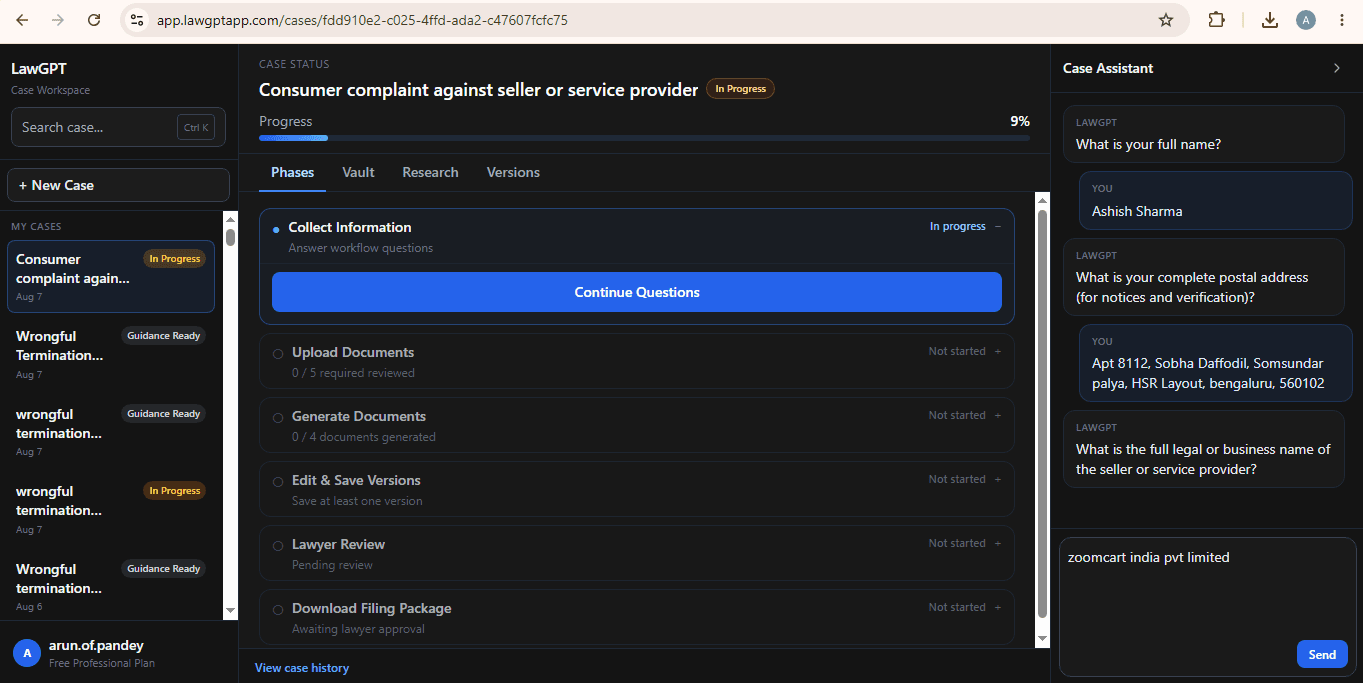
Consumer rights are not motivational posters. In India they are actionable expectations backed by the Consumer Protection Act, 2019 and related rules—safety, information, choice, to be heard, redressal, and consumer education. This guide translates those rights into practical moves when a business fails you.
Right to safety
Goods and services should not endanger life or property when used as intended. Electrical goods without certifications, adulterated food, unsafe cosmetic formulations, and negligent medical or adventure services can engage this right. Preserve the product, medical reports, and expert or service-centre opinions. Do not keep using a dangerous product merely to “prove” harm further.
Right to be informed
You are entitled to information about quality, quantity, potency, purity, standard, and price that helps you decide. Hidden charges revealed at checkout, bait advertisements, and incomplete disclosures about return conditions are common friction points. Screenshot listings and fee breakups before they change overnight.
Right to choose and to be heard
Competitive markets and fair dealing support meaningful choice. Restrictive tying, dark patterns that trick consent, and refusal to acknowledge grievances attack these rights in modern digital commerce. Use written channels so “we never received a complaint” becomes harder for the business to claim.
| Right | Everyday breach example | Evidence to keep |
|---|---|---|
| Safety | Overheating appliance causing damage | Product, photos, repair report |
| Information | Hidden convenience fee after payment | Checkout screenshots, invoice |
| Choice | Forced add-ons at payment page | UI screenshots with timestamps |
| Redressal | Refund ticket closed without reason | Ticket trail and bank statement |
Right to redressal
This is the operational heart for most readers: you can seek repair, replacement, refund, and compensation through consumer commissions and, where relevant, sectoral grievance systems. Redressal is not automatic—you must plead facts, parties, and relief. A right without a filing plan is only a slogan.
Misleading advertisements and endorsements
The 2019 framework strengthened tools against misleading ads, including celebrity endorsement accountability themes in the regulatory conversation. If you bought because of a specific claim—results, coverage, materials—preserve the ad creative and the mismatch with what you received.
Turning rights into a matter file
Rights-to-action checklist
- Name the right you think was violated in one sentence
- Attach the promise (ad, listing, contract) to that sentence
- Attach the breach proof (defect photos, denial emails)
- Attach the loss proof (payment, consequential bills)
- Send a demand referencing those exhibits
- Escalate to /workflows/consumer-complaint if ignored
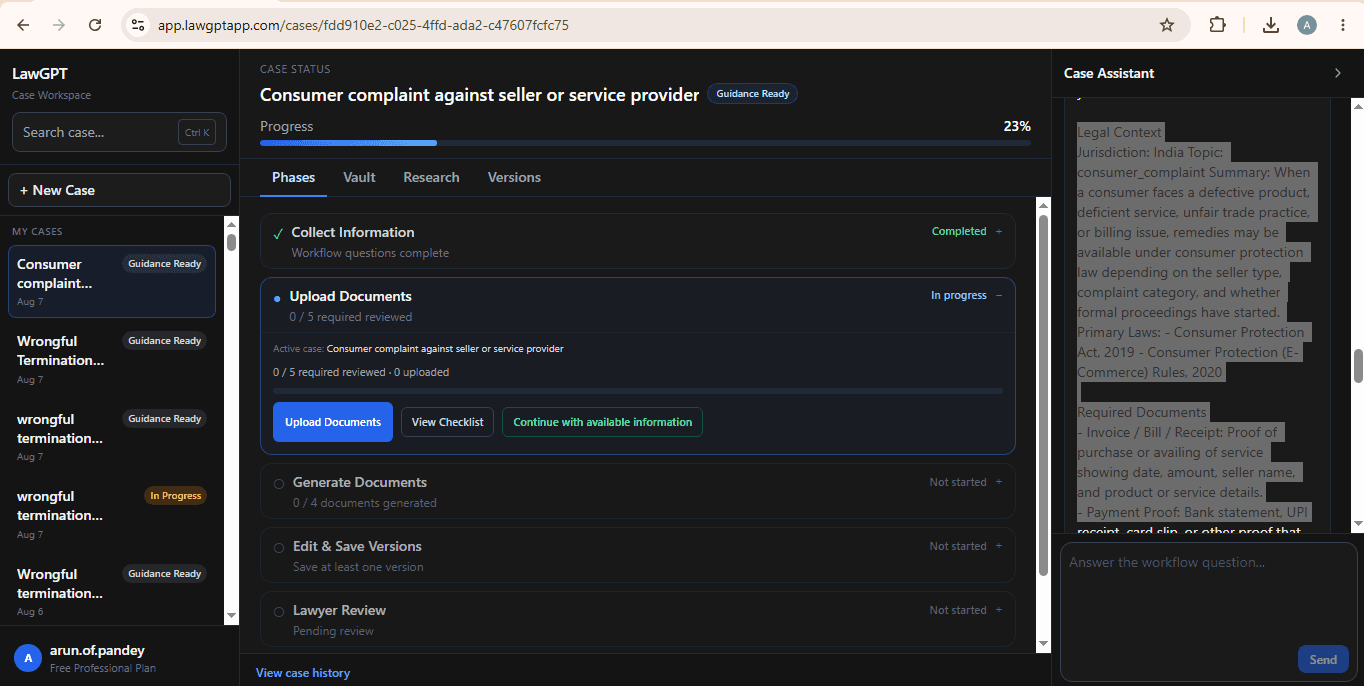
LawGPT on /platform helps you keep that spine consistent from notice to commission complaint. Rights language impresses no one without annexures; annexures without a rights theory confuse forums. Use both.
What consumer rights do not guarantee
They do not guarantee a free upgrade, a win on every subjective dissatisfaction, or damages for buyer’s remorse after a clear, compliant sale. They protect against unfairness, deficiency, defect, and deception—not against every imperfect shopping day. Calibrating expectations makes your strong claims more believable.
Right to consumer education—and why it is operational
Education is listed among consumer rights because uninformed buyers cannot enforce anything else. Reading invoices, checking MRP rules where relevant, understanding return windows, and knowing commission tiers is part of the right’s practical content. Businesses sometimes rely on complexity. Your counter is literacy plus records. Share accurate knowledge with family buyers too—many household disputes begin with a purchase made by someone who never received the invoice.
Education also means knowing limits. Not every rude staff interaction is a commission case. Not every subjective taste mismatch is a defect. Rights are strongest when tied to safety, deception, deficiency, and unfairness with proof.
Digital dark patterns as consumer issues
Interfaces that hide cancellations, add disguised recurring charges, or use confusing consent toggles increasingly attract regulatory and consumer attention. Capture the UI with timestamps. Note how many steps it took to cancel versus to subscribe. If a “free trial” converted without clear consent, preserve emails and bank mandates. These are information and choice problems with paper trails if you create them quickly.
Rights against misleading celebrity-led claims
- Save the advertisement creative and platform where you saw it
- Note the specific claim you relied on
- Compare claim versus delivered performance with objective measures
- Include the seller and, where facts support, advertising linkages described carefully
Do not sue a celebrity casually because a product disappointed you. Build the reliance and falsity record first. The modern statute took advertising seriously; your exhibits must too.
Enforcement path tied to each right
Safety issues may justify urgent medical or injunctive attention alongside consumer remedies. Information and choice violations often support refund plus regulatory complaints. Redressal rights culminate in commission orders when private escalation fails. Map the right to the remedy so your notice does not read like a dictionary of all rights at once.
When you are ready to enforce, structure the matter in /workflows/consumer-complaint and keep rights language tied to annexures. /platform review helps when unfair-contract or advertising theories make the pleading more complex than a simple refund.
Connecting each right to a one-week action plan
Right to safety: stop use, photograph, notify, medical care if needed. Right to information: archive the listing and fee breakup. Right to choice: screenshot dark patterns and forced add-ons. Right to be heard: open tickets and email grievance officers. Right to redressal: diary a notice and commission deadline. Right to education: read one reliable guide—like this—and verify pecuniary limits before filing. Rights become real only when converted into dated actions.
Families shopping together should decide who holds invoices. Many disputes die because the payer, the user, and the ticket-raiser are three different people with three incomplete phone galleries. Centralise the evidence owner on day one.
Unfair trade practices you can actually recognise
False representation of quality, false bargain price claims, non-disclosure of substantial risks, and bait-and-switch patterns recur in Indian consumer case stories. When you suspect an unfair trade practice, write the representation, the truth, and the reliance in three sentences before you draft anything longer. If you cannot write those three sentences, you may have dissatisfaction without a pleadable unfair practice—and that honesty will save filing fees.
Rights in healthcare billing and education services
Patients and students are frequent consumer complainants when billing diverges from estimates or when advertised facilities never materialise. Keep estimate sheets, consent forms, fee receipts, prospectuses, and brochures. Clinical negligence is a specialised allegation; billing deficiency and false facility claims are often more straightforward consumer theories. Choose the theory that matches your exhibits. Parents paying for coaching should archive demo-lecture promises and batch-change messages that reduce contact hours after fees are paid.
In housing-related services—brokerage, packing movers, society paid services—save quotations and WhatsApp scopes. Movers that damage goods create hybrid goods and service fact patterns; photograph loading and unloading conditions. Rights to safety and redressal meet at the doorway when furniture arrives broken.
Collective harm and still filing individually
A defective batch or misleading ad may harm many buyers. You can still file an individual complaint for your loss while noting the wider pattern carefully. Group chats debating a perfect collective case can delay your personal refund forever. Individual organised filings often move first; structure yours in /workflows/consumer-complaint rather than waiting for consensus.
Teaching household buyers a minimum evidence habit
Consumer rights scale when families practise small habits: save invoices to a shared folder, photograph big parcels on opening, and never give delivery OTPs early. A single household evidence habit prevents more losses than a dozen lectures about statutes. When a dispute starts, appoint one evidence owner. Rights language then has something to attach to. Without the habit, even strong legal rights arrive too late—after chats expire and sellers vanish.
Schools, resident groups, and offices can share accurate redressal pathways without spreading myths about overnight imprisonments for late refunds. Education as a right includes rejecting misinformation. Point people to commission processes and organised tools like /workflows/consumer-complaint when escalation is real.
When a business cites “company policy” against a clear representation in the listing or contract, remember that policy pages do not automatically defeat consumer rights. Annex both the representation and the policy. Ask which one you were shown at purchase. Rights to information and redressal meet exactly at that contradiction—and that is often enough to unlock refunds once formalised in a notice via /workflows/consumer-complaint.
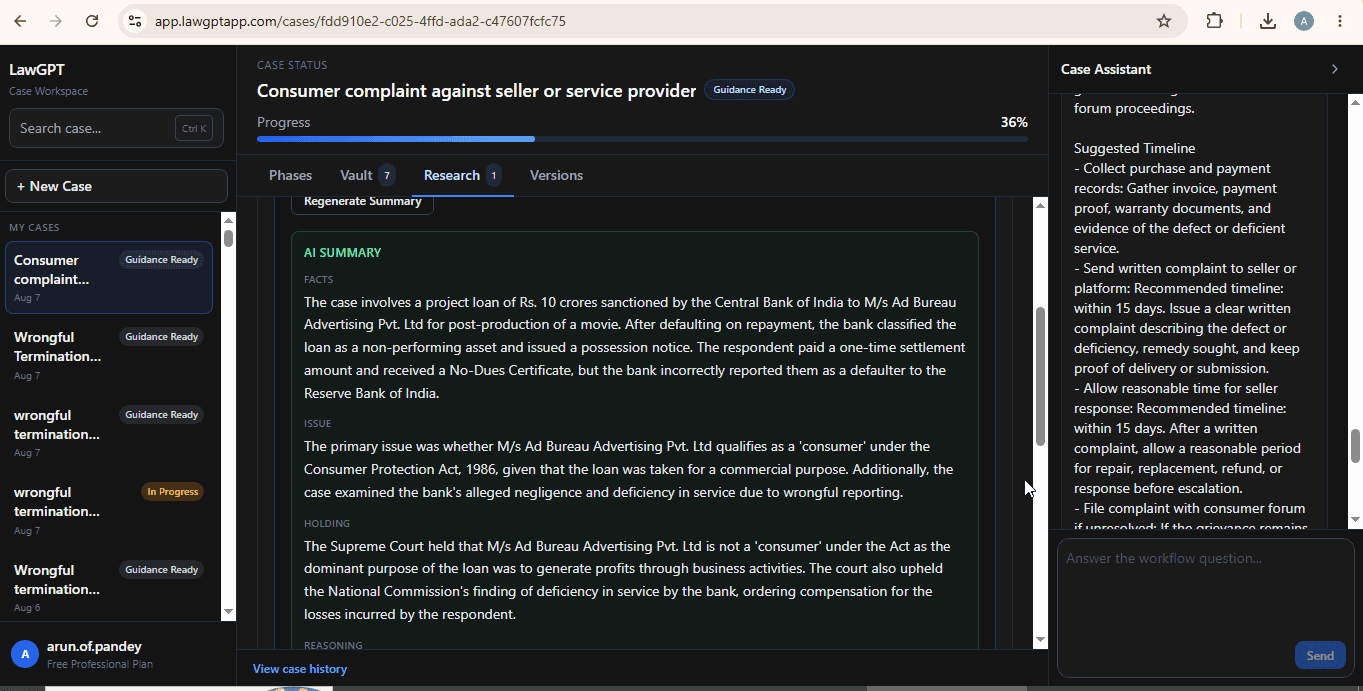
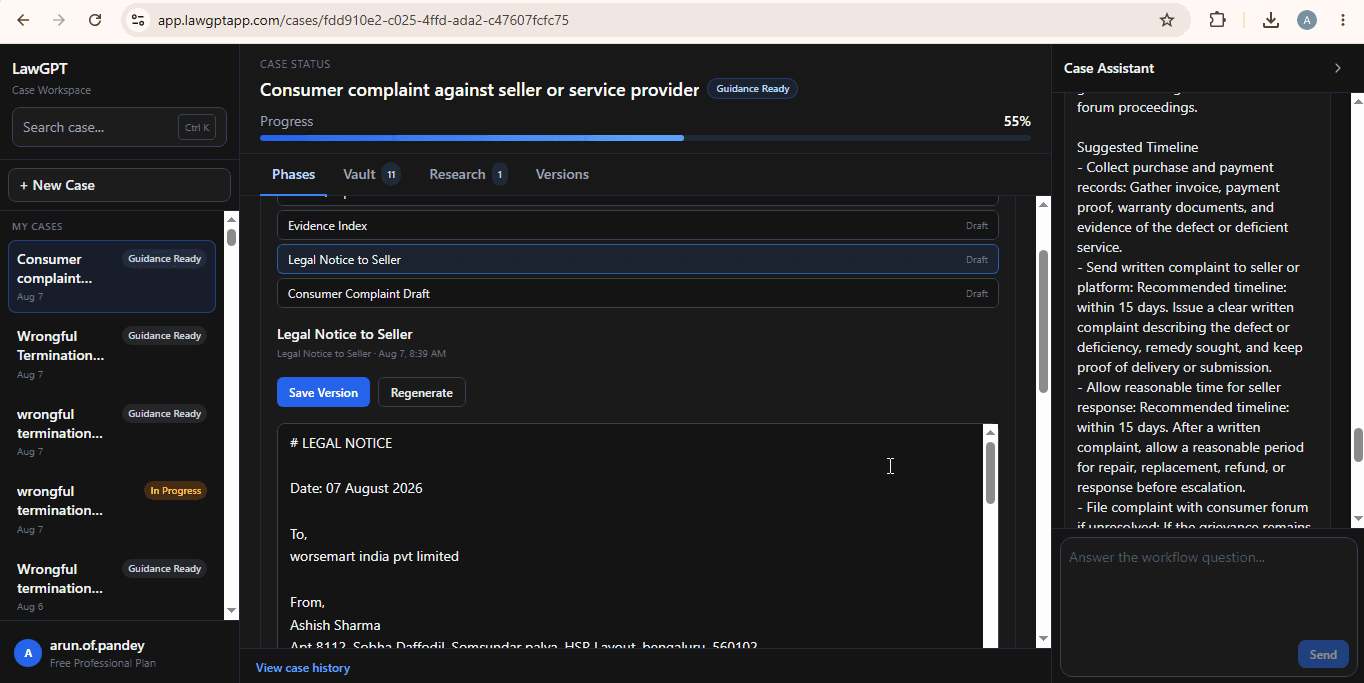
Inside the LawGPT workflow
Frequently asked questions
Consumer status usually requires consideration. Free services can be complicated; look at linked paid packages, platform terms, and whether consideration exists indirectly.