
Consumer Law
Refund Not Received: How to Escalate in India
A practical playbook when a seller or platform promises a refund that never credits—evidence, timelines, notices, and consumer commission options.
Few consumer problems feel as simple—or become as messy—as a refund that never arrives. The seller says “processed,” the platform says “pending with bank,” and your statement shows nothing. This guide gives a calm escalation path under Indian consumer practice so you can convert chat promises into a collectible claim.
Freeze the refund promise
Screenshot the refund approval message, RMA or return ID, reverse pickup tracking, and any email stating the amount and timeline. Download bank and UPI statements covering the expected credit window. If a wallet credit was forced instead of a source refund, capture that too—it may not match what you agreed.
- Order ID, payment ID, and invoice PDF
- Return request acceptance screenshot
- Courier pickup and delivery-to-warehouse scans
- Refund “processed” notification with date
- Bank or card statement showing non-credit
- All chat transcripts export if the app allows
Escalate inside the ecosystem first
Use the platform grievance officer contacts published on the website, not only the chatbot. Send a short email with annexure list and a firm deadline. For card payments, ask your issuer about chargeback windows—but understand chargeback is a banking remedy with its own rules, not a substitute for consumer commission jurisdiction when you need broader compensation.
| Situation | Likely bottleneck | Your move |
|---|---|---|
| Return picked up, no refund | Seller warehouse QC dispute | Demand QC report in writing |
| Refund “processed,” no credit | Payment rail delay or wrong instrument | Ask for UTR / ARN reference |
| Wallet credit instead of source | Policy fine print | Challenge if promise was source refund |
| Ticket closed unilaterally | Support playbook | Restart via grievance email + notice |
Legal notice for refund delay
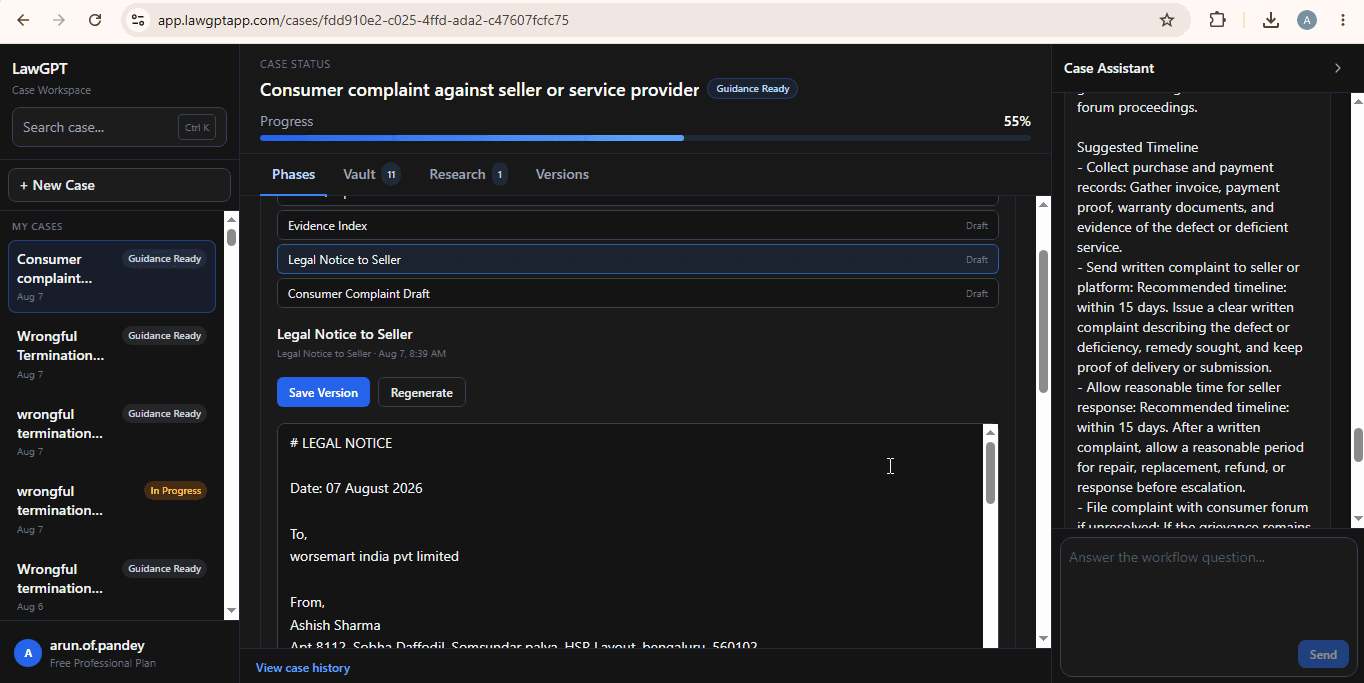
Your notice should narrate payment, defect or cancellation basis, return compliance, refund promise, and failure to credit. Demand the principal refund, reasonable compensation for harassment if justified, and litigation costs if forced to file. Serve the seller and, where facts support, the marketplace entity that controlled payment and refund rails.
When to file a consumer complaint
File when the deadline expires without credit, when the business denies a refund already approved, or when reverse logistics games run past policy without your fault. Choose commission tier by claim value rules. Annex the entire ticket archaeology—commissions dislike bare allegations against “the app.”
Missing-refund checklist
- Confirm return was received or seller waived return
- Collect non-credit bank proof for the full window
- Email grievance contacts with a 7–10 day deadline
- Serve legal notice with party details from invoice/T&Cs
- Draft commission prayers for refund plus proven extras
- Track hearing dates after filing
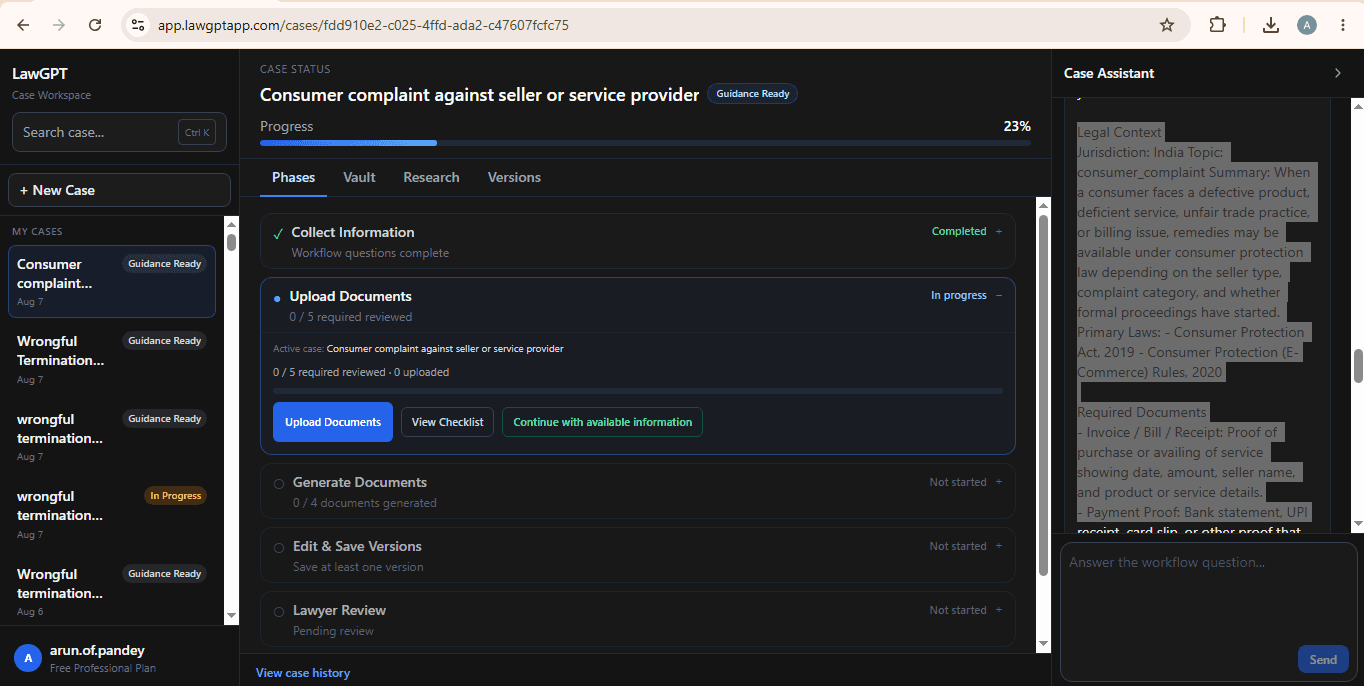
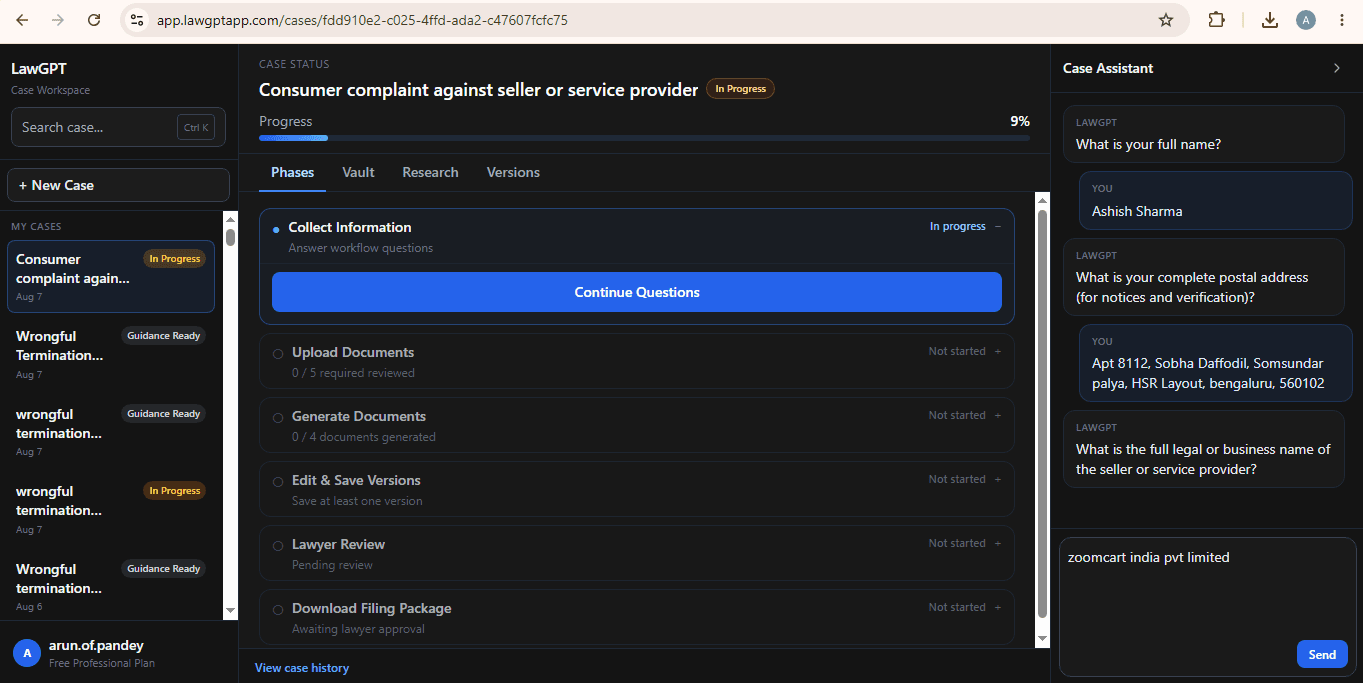
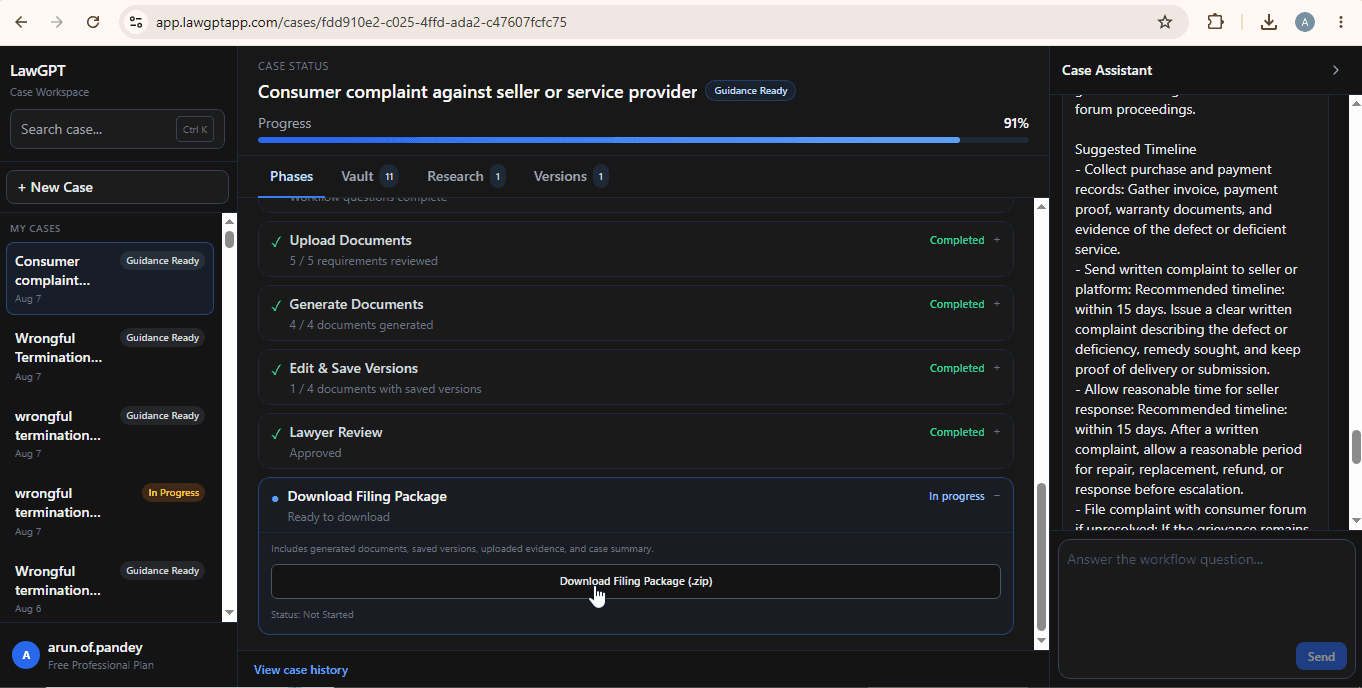
LawGPT’s /workflows/consumer-complaint flow is built for exactly this pattern: structured intake, notice draft, complaint draft, and a downloadable package. Pair with /platform if you want lawyer review before you name multiple e-commerce parties.
Settlement hygiene
If the refund suddenly appears after notice, confirm the credited amount matches the demand and close tickets in writing. If a partial offer arrives, decide consciously—do not let support agents redefine the order value downward without a documented compromise you accept.
Source refund versus wallet credit versus store credit
Consumers often agree to a return believing money will return to the original UPI, card, or net-banking source. Platforms sometimes push wallet credits or promotional store credits instead. If the policy or agent promised a source refund, capture that promise. If you voluntarily accept wallet credit, confirm the amount and any expiry. Ambiguity here creates months of circular chat. Your notice should specify the mode demanded.
For EMI purchases, refunds interact with loan schedules. Ask whether the EMI instrument will be adjusted automatically and whether any foreclosure charges appear. Annex the EMI agreement pages if charges are levied unfairly after a accepted return.
Bank and card angles without abandoning consumer remedies
Chargebacks and payment disputes can pressure a merchant, but they follow card network rules and timelines that are easy to miss. Open a dispute with incomplete evidence and you may lose both the chargeback and time. Use banking remedies as a parallel track when available, not as a reason to stop documenting a consumer claim. Keep the arbitration or dispute reference numbers inside your annexure set.
Accounting for partial refunds
- Verify whether shipping was deducted contrary to policy
- Check if convenience fees were declared non-refundable up front
- Confirm currency conversion differences on international payments
- Reject silent deductions labelled only as “adjustments”
Partial refunds are common settlement tools. Accept them only with eyes open. If you continue the case for the balance, say so in writing so the company cannot claim full and final closure from a partial credit.
Marketplace escalation templates that stay calm
Your grievance email should be dull: order ID, payment ID, return ID, amount, promise date, non-credit proof, and a deadline. Attach a zip index. Copy the grievance officer addresses published in the website footer or consumer policy page. Dull emails with annexures outperform long emotional essays.
Generate that notice and, if needed, the commission complaint through /workflows/consumer-complaint so the amount claimed does not drift. Use /platform when multiple respondents must be pleaded carefully after a refund vanishes between seller and platform.
Evidence pack for “refund processed” lies
When a screen says processed and your bank says otherwise, combine: (1) the processed screenshot with timestamp, (2) the refund reference if any, (3) bank statement PDF for a window starting two days before the processed date and ending two weeks after, (4) a written ask for UTR/ARN, and (5) the agent chat promising the credit date. This five-part pack converts a he-said-she-said support loop into a commission-ready annexure set.
If the company later claims the refund failed because of a wrong account, demand written proof of the failure code and the date they learned of it. Silent inaction after a failed credit is itself a deficiency narrative.
Negotiation when they offer a coupon instead
Coupons with expiry dates and category exclusions are not cash. If you no longer trust the marketplace, reject coupons and restate the cash ask. If you still shop there, value the coupon realistically—often far below face value—and decide consciously. Put acceptance or rejection in writing so a coupon email cannot be spun as full settlement.
Marketplace accounting tricks to recognise
Watch for refunds quietly issued as promo cash with expiry, refunds net of shipping contrary to the policy screenshot you saved, and refunds marked complete in-app but pending in payment gateway emails. Download gateway emails—they sometimes reveal the truth when the app UI lies. If multi-item orders partially return, compute line-item refunds yourself and challenge bundled math that hides a missing SKU credit.
For cash-on-delivery returns, reverse logistics failures are common. If pickup never happens despite your availability windows, email the windows you offered with screenshots of the failed attempts. COD refunds still require proof of return completion; your diligence on pickup attempts becomes the case.
When the bank credited but the merchant says otherwise
Occasionally money returns and the merchant UI still shows pending, or the opposite. Trust annotated bank statements over chat agents, then ask the merchant to reconcile. If a double debit occurred, your claim may include the extra pull. Keep daily statement exports until reconciled, and fold them into the same matter file you use for notices on /workflows/consumer-complaint.
Writing the one-page refund brief
Before notice or filing, write one page: order identity, amount paid, reason for refund, return status, promise date, non-credit proof, ask, and deadline. If you cannot fit it on one page, your chronology is probably messy—fix it. Hand that page to any reviewer. Attach the ten supporting screenshots behind it. This brief becomes the opening section of your legal notice and the fact section of your commission complaint without rewriting history each time.
If multiple refunds are pending across orders, do not mix them into one confused ticket. Separate matter files—or at least separate chronologies—so each order keeps its own promise dates and non-credit proofs. Mixed tickets help agents close everything as “complex” without paying anything. Clarity is leverage.
If a refund credit finally appears for less than promised, do not silently accept it. Email a short reconciliation the same day stating the shortfall and asking for the balance by a dated deadline. Partial credits become full-and-final only if you agree in writing—not because an app marked the ticket closed.
Inside the LawGPT workflow
Frequently asked questions
Payment rails vary, but multi-week silence after a processed claim warrants written escalation. Use the date in the processed message as your anchor and diary a firm follow-up.