
Criminal procedure
FIR Refusal FAQ: Police Station, SP Complaint, Magistrate and Evidence Questions
Straight answers to common questions after police do not register an FIR, with careful guidance on rights, documents, jurisdiction, safety, and escalation.
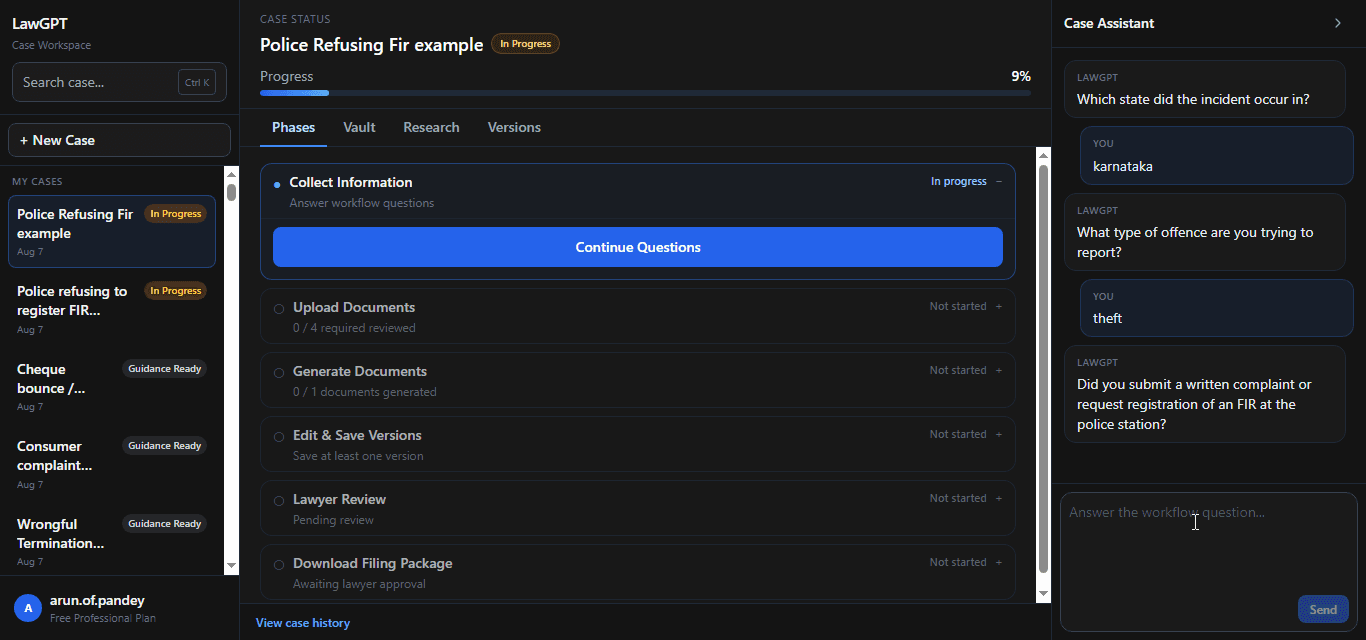
FAQ pages are useful for orientation, but they are risky when treated as an instruction manual for a live criminal matter. Whether police should register an FIR, make an entry, verify facts, or direct you elsewhere turns on the allegations and current law. Use the questions below to make a better record and ask a better lawyer, not to decide that every disagreement is a criminal case.
Station questions people ask first
“Can police refuse my complaint?” They should receive information and deal with it according to law, but the form of action depends on whether facts disclose a cognizable offence, jurisdiction, and other legal requirements. If staff will not accept a written paper, preserve a signed copy and document the interaction. “Do I need an FIR number immediately?” Not necessarily; first establish what was received and what reference or next step applies.
“What if the officer says it is civil?” A civil remedy and criminal conduct can coexist, but not every broken promise is cheating or breach of trust. Focus on intent, representations, entrustment, threats, forgery, violence, or other concrete acts—not on anger. A lawyer can test the facts against the applicable offence without encouraging exaggeration.
Escalation and court questions
“Should I complain to the SP?” A senior-police escalation is commonly considered when a station has not acted on information that appears serious. It should include the station complaint, delivery/refusal proof, chronology, and relevant evidence. “Can I go to a Magistrate?” A court route may be available, but its suitability, provision, affidavit/verification requirements, and jurisdiction require current legal advice.
“Will an SP complaint guarantee an FIR?” No. It creates a formal escalation record and asks the authority to act lawfully; it does not guarantee a particular classification, investigation, arrest, or court result. Anyone selling a guaranteed FIR is not giving reliable legal guidance.
| Common belief | More accurate position | Practical response |
|---|---|---|
| “Email means FIR.” | Email may record submission, not registration. | Use official channel and retain proof. |
| “No receipt means I have no case.” | It creates an evidentiary challenge, not an end. | Keep signed copy and contemporaneous note. |
| “Court always orders FIR.” | Courts assess route, facts, and record. | Prepare a complete advocate briefing. |
| “More screenshots are better.” | Context and source integrity matter more. | Preserve originals and index relevant extracts. |
Evidence and safety questions
“Should I forward messages to everyone?” No. Preserve originals and limit disclosure to counsel and appropriate authority. Public posting can endanger people, alert an accused, influence witnesses, or create privacy and defamation risks. “Can I secretly obtain someone else's phone data?” Do not access accounts or devices without authority. Ask counsel about lawful preservation requests.
“What if I am scared to return to the station?” Do not go alone if that creates risk. Contact emergency services where necessary, take a trusted support person when appropriate, and speak with a lawyer or support organisation. For survivors and vulnerable persons, specialised support and statutory procedures may apply. Your safety is not secondary to completing a form.
How to use an FAQ responsibly
Before acting on an online answer
- Check the date and jurisdiction
- Separate general education from advice on your evidence
- Keep your original documents unchanged
- Do not copy allegations that are not true
- Obtain qualified help for urgent, serious, or sensitive facts
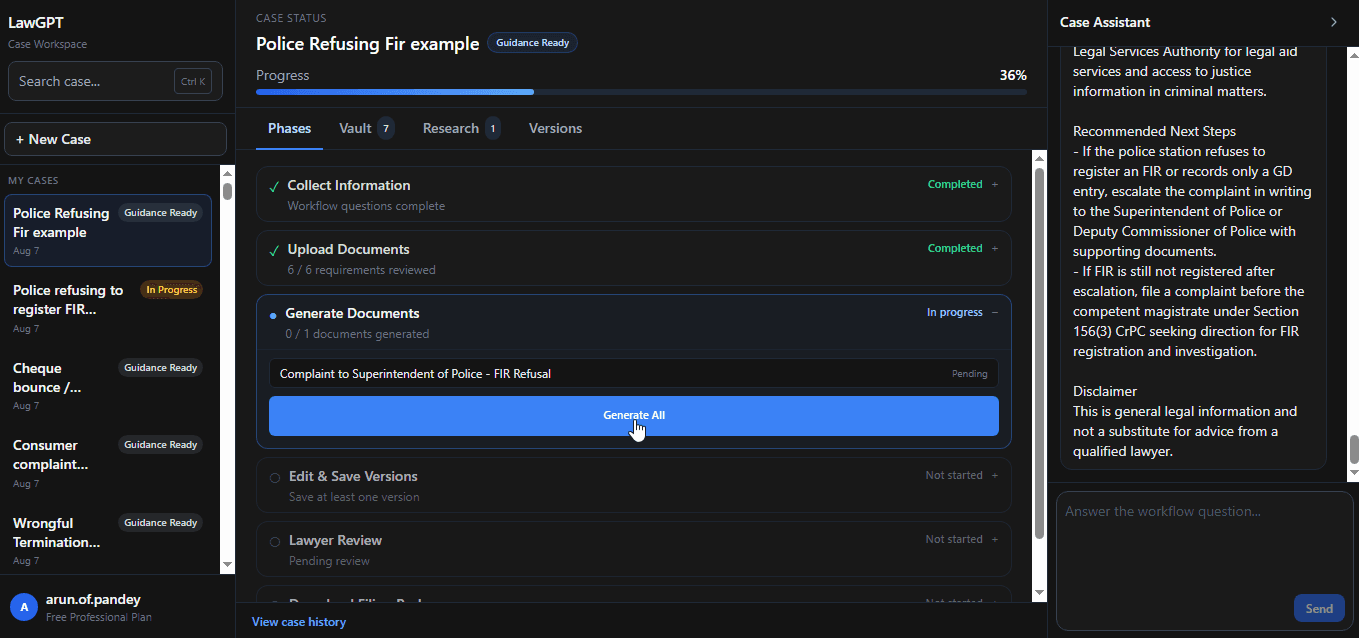
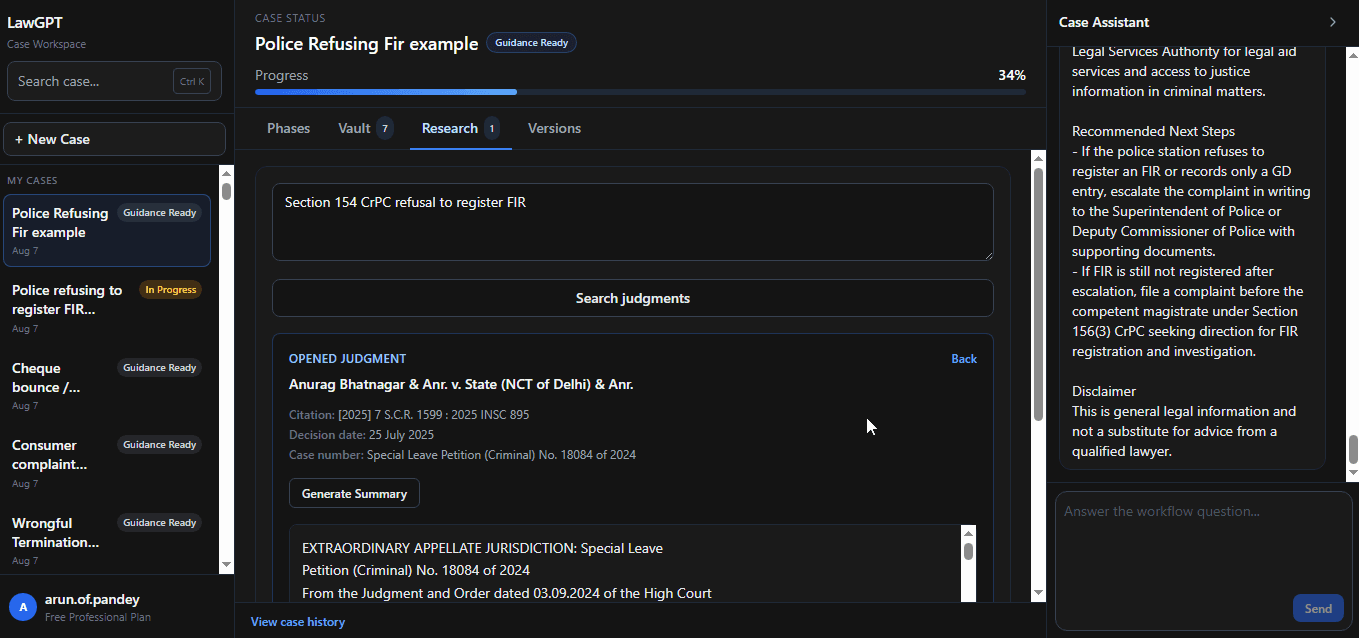
The practical next move after reading FAQs is to make a clean chronology. List the incident, the station visit, every delivery attempt, evidence source, witness, and immediate risk. Then choose a traceable lawful route with legal advice. The Police Refusing FIR workflow can help assemble that package, but it is not a substitute for police, court, or counsel.
Questions that should trigger immediate advice
Seek prompt qualified help when the matter involves violence, sexual offences, child safety, caste-based harm, stalking, threats, custody, arrest risk, a serious medical issue, or evidence that may soon disappear. A generic FAQ cannot assess safety, statutory protections, confidentiality, or the correct forum in those situations. Write down the immediate risk and tell the adviser what has already been reported.
Questions about filing in a particular court, swearing an affidavit, naming an offence, producing a device, or making a compromise are also case-specific. Use the FAQ to prepare documents and questions, not to make a procedural choice from a single sentence online.
Questions that improve the record
Ask yourself: what exactly did I submit, when, to whom, and what happened next? Which facts did I see personally? Which exhibit supports each material event? Which location, account, camera, witness, or record could be lost? These questions produce a file that an authority can act on.
Avoid a different question: how can I force a desired outcome today? Criminal procedure is not a customer-service escalation. A factual, lawful request is stronger than an unsupported demand for registration, arrest, or punishment.
Inside the LawGPT workflow
Frequently asked questions
Location and offence facts matter. Police may have mechanisms for out-of-area information, but follow official guidance and preserve your approach.