
Employment Law
Wrongful Termination in India — FAQ
Clear answers to the questions employees ask most after an unfair or sudden termination—notice, forums, settlements, and evidence.
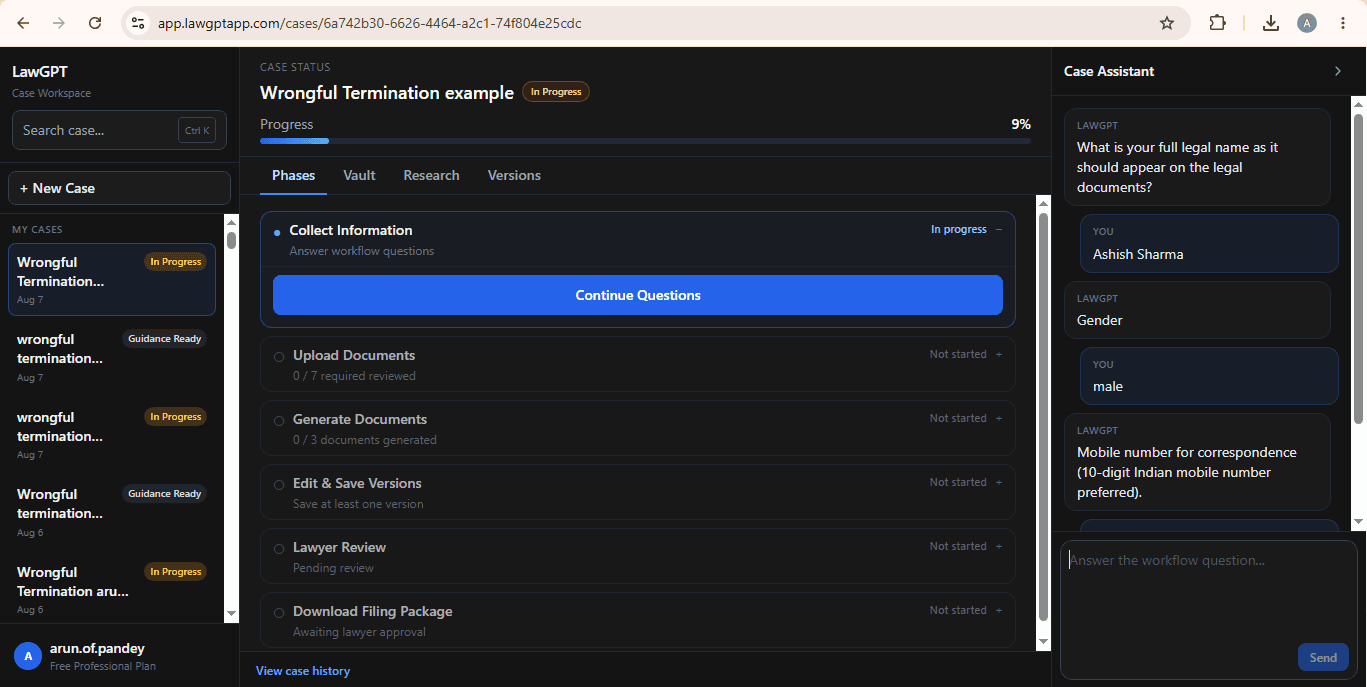
This FAQ consolidates practical answers employees search for after a disputed exit. It is general education for India, not a verdict on your case. When stakes are high, pair these patterns with advice on your contract and state procedure, because local practice and standing orders can change the playbook.
Basics
What is wrongful termination in simple terms?
It is an exit that breaks your contract, skips mandatory process, violates labour protections that apply to you, or punishes you for legally protected complaints. The employer’s label—“resign,” “abscond,” “performance”—does not end the analysis. Substance, documents, and process do.
Is India an at-will employment country?
No. India does not follow US-style at-will employment as a default for all workers. Contracts, standing orders, and labour statutes constrain how employment ends, especially for workmen and covered establishments. Managerial contracts still bind employers to their own notice and process clauses.
Notice, probation, and resignations
Probationers still look to their clause; shorter notice is common but not a licence for retaliatory exits. Forced resignations can be challenged when pressure is proven—capture the pressure in writing quickly. If you already resigned, you may still contest surrounding illegality, but expect a harder factual fight about voluntariness.
| Question theme | Short answer | Read next |
|---|---|---|
| Zero notice | Often triggers notice-pay claims | can-employer-terminate-without-notice |
| Which forum | Depends on workman versus managerial status | labour-commissioner-complaint-process |
| How to start | Evidence, then dues, then notice | wrongful-termination-step-by-step |
Forums and timelines
Labour department and conciliation pathways suit many wage and workman disputes. Civil suit paths appear more often for senior contract claims. Limitation and delay doctrines punish slow starts—organise within weeks, even if you hope to settle, because evidence quality collapses when portals lock and memories blur.
Settlements
Yes, you can settle after notice or even after filing. Price dues separately from premium. Never rely on oral “we will pay next month.” If confidentiality is required, ensure it is mutual and does not block statutory filings already made without a proper withdrawal path.
Using structured tools
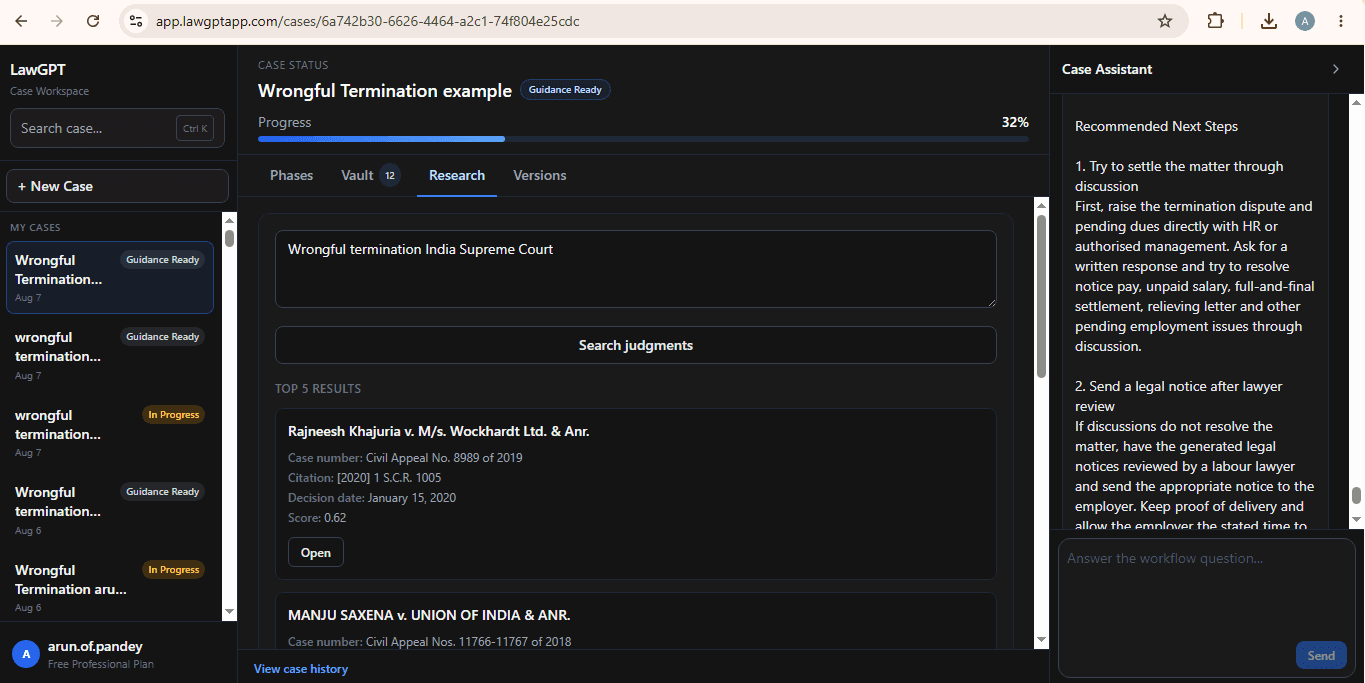
If you want a guided path from facts to drafts, use /workflows/wrongful-termination. For the broader product surface—research, review, packages—see /platform. Tools help you stay consistent; they do not invent jurisdiction or replace attendance at hearings.
FAQ action list
- Read your termination clause today
- Export payslips this week
- Write a chronology before you forget phrases used by HR
- Itemise dues before you negotiate feelings
- Serve demands with proof of delivery
Still confused?
Read the complete guide and the step-by-step plan next, then the documents checklist. Those three together cover most employee situations before specialist issues like POSH retaliation or unionised workplaces require tailored advice.
Money and documents—rapid answers
Unpaid salary remains claimable after exit. Notice pay depends on clause and lawful summary-dismissal pathways. Gratuity depends on eligibility rules and tenure math. Experience letters are practical necessities you should demand in writing. PF should be verified on UAN regardless of the fight about termination legality. None of these answers replace your appointment letter; they tell you which paragraph to read first.
If F&F shows mysterious deductions—training costs, laptop damage, notice recovery—ask for the clause and computation. Deduction without explanation is an invitation to dispute, not a closed account. Pay slips and asset handover acknowledgments decide many of these skirmishes.
Process and forums—rapid answers
Legal notice first is usually smart. Labour department pathways often fit workmen and wage-centric disputes. Civil routes appear more for senior contract claims. POSH retaliation needs coordinated handling with the IC process. Criminal complaints are for criminal facts. If you are unsure, classify duties and contract before you pick a building to visit.
Evidence—rapid answers
- Screenshots help; exports with timestamps help more
- A same-day confirmatory email after an oral termination is powerful
- Positive appraisals undermine sudden performance exits
- Witness names should be listed privately before people forget
Perfect evidence is rare. Diligent evidence is enough to start. Do not delay the entire case because one payslip is missing; demand the missing paper while proceeding on what you have.
Settlement—rapid answers
You can settle at any time. Prefer written terms with dates. Neutral letter wording can be worth more than a small cash increment. Broad releases deserve a slow read. Confidentiality should not be a one-way muzzle if the employer still disparages you internally to BGV agencies.
For structured drafting after you understand these FAQs, continue with the complete guide and step-by-step plan, then use /workflows/wrongful-termination. Optional review on /platform remains the right move when your FAQ answer is “it depends” and the dependency is expensive.
Special situations employees ask about
Fixed-term contracts that end on the stated date are different from mid-term terminations that ignore the term clause. Contractor or consultant arrangements may be misclassified employment—look at control, exclusivity, and integration, not only the title on the invoice. Pregnancy and maternity-adjacent exits raise specialised protections and should not be handled with a generic performance template. Cross-border remote work with an Indian employment entity still usually starts with the Indian contract and Indian forums, though foreign law clauses complicate strategy.
Startup ESOPs, garden variety PIPs, and “role eliminated” emails each need their own exhibit focus. ESOP cases lean on plan documents; PIP cases lean on target fairness and timing; redundancy cases lean on whether selection was genuine. If your FAQ is “which of these am I?”, write the timeline before you pick a theory.
Contractor, intern, and fixed-term FAQs
Consulting agreements sometimes mask employment. Indicators include fixed monthly pay without true project independence, exclusive full-time control, and integration into managerial hierarchies. Interns may be trainees or mislabelled employees depending on stipend structures and duties. Fixed-term employees should read what happens if the term is cut short—many letters require notice or pay even inside the term unless a specific termination clause applies. Collect the contract, duty evidence, and pay method before you pick a slogan.
Remote workers employed by an Indian entity generally still look to Indian employment forums for Indian contracts, but arbitration clauses and foreign parent secondments complicate the map. Do not ignore a clause; get it read before you file in the wrong place.
Settlement FAQ add-ons
Yes, you can take a lower cash amount for faster letters. Yes, you can refuse confidentiality that stops you from discussing facts with your spouse or lawyer. Yes, you should get proper invoices if professional fees are part of a consultancy exit. No, you should not rely on a friendly manager’s WhatsApp promise beyond a dated email confirmation. When answers still feel situational, move from FAQ reading to the step-by-step plan and a structured file in /workflows/wrongful-termination.
Quick scenarios employees describe in consults
“They took my laptop and said I resigned.” Send a protest email the same day and demand written clarity. “They offered three months if I sign a release tonight.” Sleep on it and compare to your dues sheet. “My manager says labour cases never win.” Ask for their legal basis in writing; anecdotes are not law. “I already joined a new company—can I still claim?” Often yes for unpaid contractual dues; disclose facts honestly when required. “Should I record calls?” Know consent and evidence rules before you do; written confirmation emails are safer defaults for most employees.
If a scenario mixes POSH, criminal allegations, and wages, do not solve it with a single FAQ answer—split the tracks with advice. Structured intake at /workflows/wrongful-termination still helps you not lose the wage track while specialised issues are handled.
If your question is whether to resign under pressure today, the practical FAQ answer is: ask for the proposal in writing, do not sign in the meeting room, export your documents the same evening, and speak to counsel or a structured workflow before you create a resignation email that will be used against you. Speed of documentation beats speed of signatures.
Inside the LawGPT workflow
Frequently asked questions
PF membership issues and termination challenges can proceed on different tracks. Ensure contributions are correct via UAN regardless of the dispute about the exit’s legality.